Best Free Crypto Airdrops to Watch in 2026
If you're serious about catching the next big wave in crypto, there’s one thing you can’t afford to ignore in 2026: airdrops. Whether it's a high-value wallet token airdrop or a community-driven campaign, these events can deliver major upside with minimal spend. This article breaks down the most valuable free crypto airdrops to watch right now: what they are, how they work, which ones are real, and how to claim them safely, without revealing your identity.
Airdrops have evolved from random windfalls into powerful strategic tools, rewarding early users, distributing tokens to real communities, and kickstarting billion-dollar launches overnight. From DeFi to Layer-2s to meme coins with serious traction, we’ll show you how to stay ahead of the curve, dodge scams, explore the best airdrop websites, and collect rewards like a pro.
What Are Crypto Airdrops and How Do They Work?
If you’ve been searching for free airdrop crypto, this is where it gets real — airdrops are one of the few ways to receive tokens without paying or trading.
They’re targeted, tactical, and, in 2026, more powerful than ever. At their core, airdrops are token distributions meant to reward early adopters, spread ownership, and jumpstart communities. You might get rewarded just for using a product, holding a specific token, or completing a few tasks. The best part? You don’t need deep pockets to qualify, just timing, curiosity, and the right moves.
This year, airdrops have evolved. Projects now use point systems, snapshots, invite-only campaigns, even gamified quests to decide who gets tokens. Some airdrops are worth a few dollars; others, thousands. Sure, some drops are gold. But others? Just smoke. Spotting the difference takes more than luck — it takes knowing the space and moving smart.
How to Find Legitimate Airdrops
With the surge of interest in 2026, spotting the best crypto airdrops from among countless traps has become a real skill. Below are five checks every smart hunter uses.
Transparent project background
If a project isn’t willing to show its face, don’t trust it with your wallet. Legitimate teams list founders, share development updates, link to GitHub, and explain token goals clearly. When you claim tokens, you’re stepping into a living ecosystem, shaped by real builders who don’t hide.
Realistic rewards with clear terms
The best airdrops tell you exactly what you’re earning and why. No vague “millions” or suspicious multipliers. Clear timelines, claim windows, and rules show that a project values fairness. Anything unclear, overhyped, or reward-heavy with no real logic? Likely bait.
Official communication channels
If you can’t verify the air drop crypto campaign on the project’s actual Twitter, website, or blog, walk away. Scammers clone logos and send fake links fast. Always go straight to the source, not third-party lists or anonymous messages, this one habit can save your wallet.
Sybil resistance and bot filtering
If anyone can farm it, it’s probably worthless. Good airdrops now use anti-Sybil tools like Galxe, QuestN, or ZK-based proof-of-personhood. That’s a good sign. It means the project cares about real users, not inflating numbers with bot traffic or click farms.
Product-first logic, not airdrop-first hype
Airdrops work best when they support a product that already delivers real value. Look for working testnets, user traction, or existing value before tokens appear. If the entire pitch is “we’ll give you free money,” that’s a red flag, not an opportunity. Real utility comes first.
Top Free Crypto Airdrops in 2026
From memecoins with serious traction to Layer-2 giants shaping Ethereum’s future, the best crypto airdrops of 2025 are more than freebies - they’re your front-row ticket to the next wave of innovation. Below, we break down the top drops worth your time, attention, and a few smart moves.
1. Berachain (BERA)
Berachain uses a Proof-of-Liquidity model where users secure the network by actively providing liquidity that fuels the system. Its ecosystem runs on three tokens: BERA (gas), BGT (governance), and HONEY (stablecoin). The 2025 airdrop, widely considered among the best crypto airdrop events this year, rewarded early testnet users, Bong Bears NFT holders, and active community participants across several campaigns. Distribution was dynamic and behavior-based, aligning with the project’s long-term incentives.
Pros
This airdrop actually meant something - rewards were based on meaningful actions and real user involvement. Users who engaged early, tested, contributed, or held NFTs, were rewarded for doing more than just showing up. The token model is built to keep users engaged over time and has already attracted serious DeFi developers. For once, the airdrop wasn’t just promo, it seeded an ecosystem.
Cons
Eligibility was a maze: multiple snapshots, token roles, and wallet connections left many confused or excluded. Claiming through the portal required care, as scammers quickly spun up fakes. Post-airdrop price swings also hit hard, with some recipients dumping immediately, creating uncertainty around short-term value and long-term holder trust.
2. Starknet (STRK)
A high-performance Layer 2 built on Ethereum, Starknet uses zero-knowledge rollups to scale transactions securely and efficiently. In early 2025, the team launched the long-awaited STRK airdrop through its Provisions Program. With rewards going to early users, on-chain developers, GitHub contributors, and ecosystem builders based on verified activity across Starknet-native dApps and development work. It easily ranks among the top crypto airdrops 2025 for its depth, precision, and builder-first focus.
Pros
Rather than chasing hype, the team focused on rewarding long-term involvement. From testnet testers to open-source coders, the criteria prioritized users who had actually helped build or stress-test the network. As a result, the drop strengthened ties with the developer community and gave serious governance power to early supporters.
Cons
Confusion around snapshots and unclear wallet eligibility left many participants frustrated. Some users who felt they had contributed were excluded without explanation, sparking public backlash. In addition, several high-volume claimers instantly dumped STRK, leading to volatility and raising concerns about the token’s initial market dynamics.
3. LayerZero (ZRO)
LayerZero is an interoperability protocol that lets assets and messages move between chains without central bridges. In 2024, it launched ZRO via a novel airdrop: eligible users donated $0.10 per token to Ethereum’s Protocol Guild to claim.
Pros
LayerZero used the airdrop as more than a giveaway, it became a bold experiment in public funding. By filtering Sybil attacks and rewarding genuine multichain activity, the team gave weight to real user behavior.
Cons
The required donation split the community. Some saw it as visionary, others felt blindsided. Confusion around eligibility and claims added friction, and early sell-offs diluted the intended impact for many small users.
4. zkSync (ZK)
zkSync is a Layer-2 protocol built to scale Ethereum using zero-knowledge rollups. In June 2024, the team launched a highly anticipated airdrop of 3.675 billion ZK tokens - 17.5% of total supply, targeting active users and contributors. Eligibility was based on interactions with zkSync Lite and Era, including dApp usage, token swaps, contract deployment, paymaster tools, and NFT activity. The goal was to reward real usage, not passive holding or bot behavior.
Pros
This airdrop was one of the most technically refined. The team went beyond wallet balances, rewarding deeper actions that reflected real adoption. Sybil filters were aggressive, favoring users who engaged consistently. The distribution also prioritized builders and ecosystem supporters, sending a clear message: if you helped push zkSync forward, you get a voice.
Cons
Even loyal users were frustrated by confusing snapshot rules and unclear scoring mechanics. Many felt left out despite meaningful engagement. Adding to the criticism, geo-restrictions excluded entire regions, including parts of Asia and the U.S., stirring backlash and debates about decentralization in practice.
5. Fuel Network (FUEL)
Fuel is a modular Layer 2 solution that brings parallel execution to Ethereum, allowing faster and more scalable smart contract processing. Widely featured across every major airdrop list, Fuel launched its Genesis Drop in December 2024, sending out 1 billion FUEL tokens to over 200,000 wallets. Eligibility covered multiple tracks, from early testnet users to contributors in the Fuel Points program and certain NFT communities. This was followed by a second phase in early 2025 that further rewarded on-chain engagement across apps and bridge interactions.
Pros
Fuel didn’t reward idle wallets. It targeted users who actually built, tested, and bridged, spanning multiple parts of the ecosystem. The drop rewarded hands-on engagement and helped build stronger ties between developers and real contributors.
Cons
But the rollout was murky. The Fuel Points system lacked transparency, and vague eligibility details led to confusion and missed claims. A staggered two-phase approach only added uncertainty, especially for users unsure about future rounds or token valuations.
6. Eclipse (ECL)
Eclipse blends Solana’s speed with Ethereum’s security by running the Solana Virtual Machine as a modular Layer 2 that settles on Ethereum. Its “Turbo Tap” points campaign let users earn Grass for testnet use, bridging, and dApp activity. These points are expected to convert into ECL airdrop rewards, though no final rules have been confirmed.
Pros
Instead of launching with hype, Eclipse focused on product engagement. Users weren’t farming blindly - they were exploring tools, testing dApps, and shaping feedback loops. The Grass system gamified learning, helping build a savvy, protocol-aware early community.
Cons
But clarity was lacking. Participants struggled to understand if or how Grass would convert. Vague updates, no airdrop date, and inconsistent guidance left users unsure where they stood, especially as rival projects offered clearer reward paths.
7. Jupiter (JUP)
Solana’s biggest DEX aggregator, Jupiter launched the second wave of its “Jupuary” airdrop in January 2025, sending 700 million JUP tokens to 2 million+ wallets. Eligibility spanned a year’s worth of trading, staking, DAO votes, and even meme participation - all to build lasting engagement and reward real activity.
Pros
Jupiter made the airdrop feel earned, not given. Instead of rewarding just volume, they valued active users: stakers, educators, DAO voters. The campaign brought huge attention to Solana and reactivated its on-chain community with purpose and scale.
Cons
But the process confused many. Between unclear snapshot rules, tiers, and Sybil filters, smaller traders often felt overlooked. Some users got excluded with no explanation, creating frustration in what could’ve been a more transparent system.
8. Pump.fun ($PUMP)
Pump.fun is a memecoin launchpad on Solana that lets anyone create tokens instantly with no code or funding rounds. Coins are priced via bonding curves, removing early insider edge and fueling organic growth. A $PUMP airdrop is planned for 2025, based on activity like swaps, launches, and community engagement. A snapshot is coming soon.
Pros
Pump.fun acts more like infrastructure than a trend. It rewards creativity and lets anyone build without capital or clout. By connecting influence and participation to rewards, it empowers grassroots builders and meme culture without gatekeeping.
Cons
The ease of launching has flooded the platform with disposable tokens, making real projects harder to spot. With no clear airdrop mechanics announced, users are left guessing. That uncertainty could sour enthusiasm if the reward doesn’t match the grind.
9. BlastUP (BLASTUP)
BlastUP is a launchpad on the Blast Layer 2 network, designed to help early-stage Web3 projects raise capital and grow communities. In 2025, it launched a major airdrop of 30 million BLASTUP tokens. Users earned eligibility by connecting wallets, joining events, and completing social tasks. Airdrop size was based on Booster Points (BP) earned through activity.
Pros
By linking rewards to BP, BlastUP encouraged deeper participation over passive claiming. It helped onboard new users, fueled organic interest, and gave both beginners and veterans a way to get involved without needing advanced skills.
Cons
The multi-step task system confused some users, especially newcomers. Many found BP-to-token conversion unclear, and the long-term value of BLASTUP wasn’t well explained, raising concerns about whether it was a quick hype play or something more lasting.
10. DeBank (XP → DBK)
DeBank is a DeFi analytics tool evolving into a Web3 social hub. It lets users track wallets across chains, interact with protocols, and build a social profile. In 2025, the team hinted at converting XP, earned through platform activity into DBK tokens via an upcoming airdrop to reward long-term engagement.
Pros
The XP model is built around actual user activity. It encourages exploration, interaction, and long-term trust. Users are encouraged to explore, interact, and build trust naturally. It creates deeper loyalty and gives value to those who’ve consistently engaged over time.
Cons
No timeline or structure has been confirmed, leaving loyal users in the dark. That lack of clarity fuels uncertainty. Also, the social layer may feel off-putting to users who prefer pure analytics without the noise of feeds and followers.
How to stay anonymous when claiming airdrops
Even legit airdrops ask you to connect wallets, sign stuff, leave breadcrumbs on-chain. And those breadcrumbs? They get scooped up. Scammers, sniffers, data farms. Still, most folks don’t think twice about it, until things go sideways.
That’s where Linken Sphere delivers. Built for privacy-first Web3 users, it masks fingerprints, rotates identities, and blocks tracking scripts, all in one clean setup. While claiming airdrops, it isolates sessions, spoofs metadata, and keeps bots from linking wallets across drops.
You don’t have to be a developer to stay protected. If you’re earning points, testing tools, or exploring new launches, your moves shouldn’t feed surveillance engines. With Sphere, you get full control - earn rewards without exposing your wallet or behavior to the internet.
Final Thoughts
The era of passive claiming is over. In 2026, current crypto airdrops are battlegrounds. Strategy, timing, and tools matter more than ever. Whether it’s Starknet empowering early devs or Pump.fun redefining meme culture, these drops reflect something bigger: the shift toward user-first ecosystems where contribution finally pays off.
But the line between value and noise is razor-thin. Behind every airdrop is a choice to engage or to be exploited, to protect your data or leave a trail. Some drops build community; others bait it. The difference? Knowing where you stand, how to find crypto airdrops that matter, what you’re worth, and how not to get played while chasing “free.”
Today’s airdrop game demands more than farming and connecting. It’s about smart navigation and keeping your actions off the radar. The best airdrop strategy in 2025 is about being intentional, informed, and invisible where it counts.
Why Google Blocks Accounts and What Your Antidetect Has to Do With It
Google has once again complicated the mechanisms of digital identification by deploying a new, more sophisticated layer of protection based on proprietary HTTP headers. This quiet change caught most of the market off guard, triggering a wave of rushed updates. While others hastily released superficial 'fixes', we realized that we were dealing not with a minor issue but with a fundamental shift that required deep and comprehensive analysis.
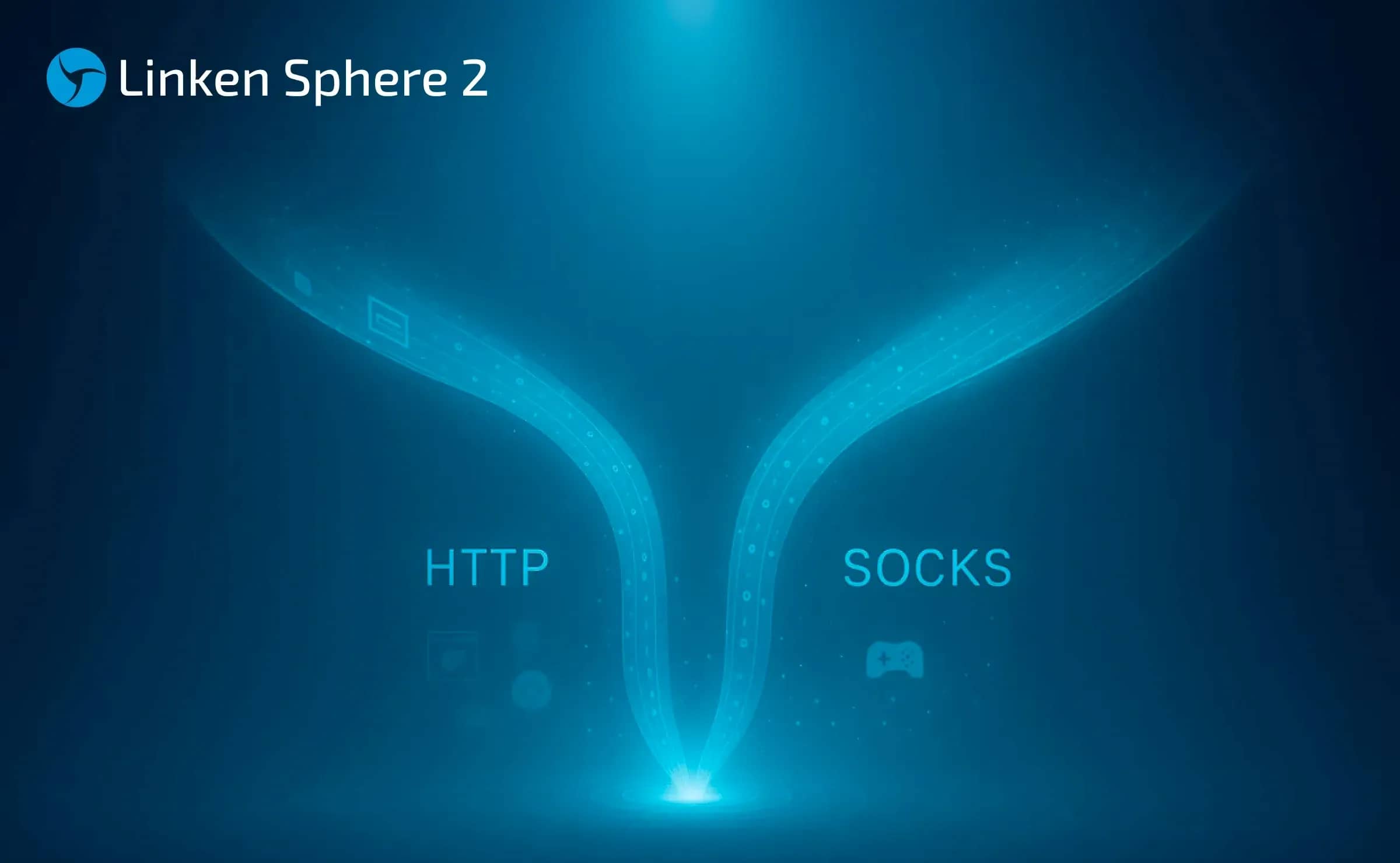
SOCKS vs HTTP Proxy: What’s the Real Difference and Which One to Choose?
There are times when you don’t want a website to link the request back to your device. That’s where a proxy comes in, it acts like a middle layer and sends the request for you. The site sees the proxy’s info instead of yours. It’s a go-to trick when you’re trying to see a page that’s not available in your region, pull content that’s restricted by location, or avoid hitting a wall when sending lots of requests.
The Best Alternative to OBS Studio
Working with a webcam on many online platforms can turn into a real challenge. A strict oval or rectangular frame appears on the screen, but your image doesn’t align perfectly with it. As a result, the system blocks further progress, demanding perfect alignment, and your workflow is disrupted before it even begins.