
7 Free Antidetect Browsers — Download and Use
In 2026, the antidetect browser is a basic tool for working with multi-accounting, traffic arbitrage, parsing, and bonus hunting. Platforms have strengthened anti-fraud systems, and one proxy is no longer enough – a correct digital fingerprint, profile isolation, and other technical parameters are important. It's no surprise that the search query "free antidetect" remains one of the most popular. Many beginners actively look for a reliable free antidetect browser download to start working without initial investments.
In this article, we'll analyze which free antidetect browsers are available in 2026, how free plans differ from completely free solutions, and when it's worth upgrading to a paid version.
7 Free Antidetect Browsers
Before diving into our antidetect browser list, you should know that there are no completely free and reliable antidetects at the same time. In 2026, the correctness of the fingerprint, the frequency of kernel updates, and resistance to anti-fraud require constant development. Therefore, the most reasonable way to get a high-quality tool without investment is to use the basic or trial versions of proven services.
Linken Sphere
Linken Sphere is a professional Chromium-based antidetect browser focused on stable work with multi-accounting, traffic arbitrage, and advertising accounts. The service focuses on realistic digital fingerprints and reliable profile isolation, which is especially important when working with modern anti-fraud systems. The kernel is updated regularly and promptly: for example, the update for Chrome 144 was released 3 days after the official Google update.
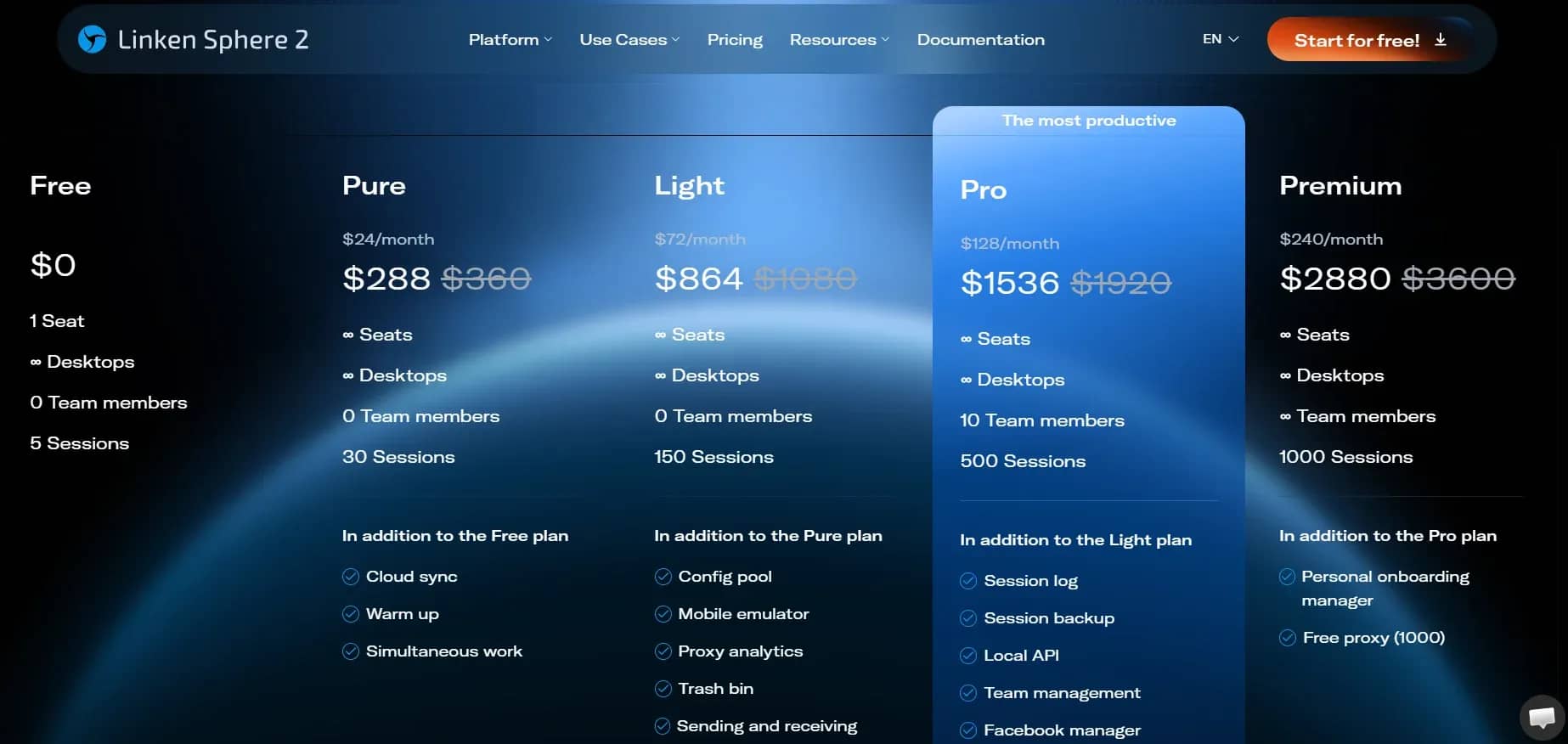
Key features of the Linken Sphere free plan:
- 5 profiles free and without time limit – you can work calmly without rushing and hidden restrictions.
- Flexible fingerprint configuration – control of browser parameters: user agent, WebGL, Canvas, language, time zone, screen resolution, plugins, and other device characteristics.
- Proxy support – the ability to connect a separate proxy to each profile with full session isolation.
- Account isolation – profiles do not intersect with each other in terms of cookies, cache, and system parameters.
- Mass operations – import cookies, accounts, and proxies for quick launch and scaling.
- Support for different types of devices – creating an environment for desktop and mobile devices.
- Automation and API – tools for integration with external services and automation of workflows.
If the task is to minimize the risk of blocking without investing at the start, Linken Sphere is arguably the most balanced free antidetect browser currently available.
AdsPower
AdsPower is a popular Chromium-based antidetect browser widely used in e-commerce, traffic arbitrage, and work with marketplaces. This is a relatively inexpensive product from Chinese developers. Support for the current version of Chrome is released with a noticeable delay compared to market leaders, but within the framework of the working cycle of updates.
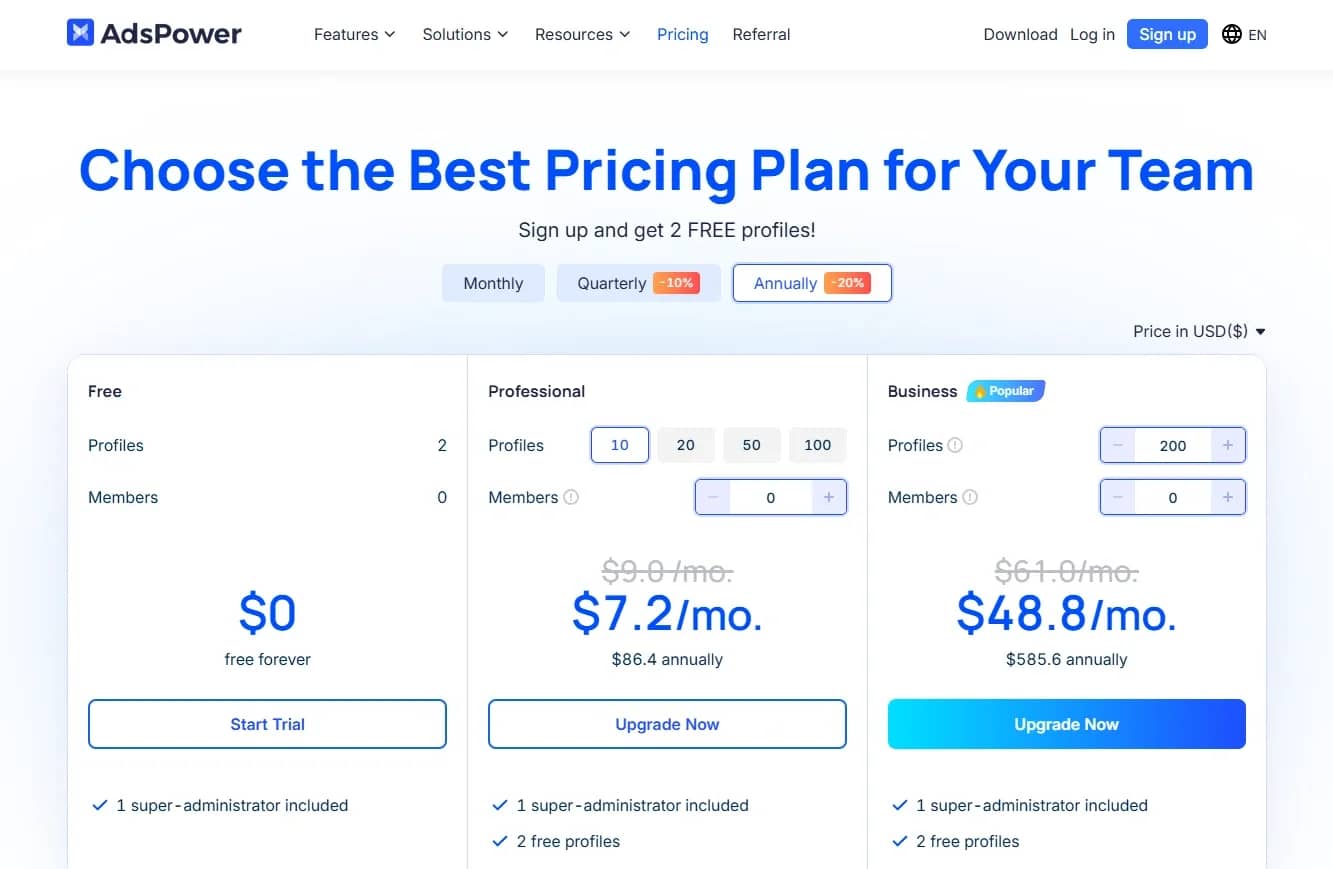
Key features of the AdsPower trial version:
- 2 profiles free – the basic plan allows you to create only two working profiles.
- Flexible fingerprint configuration – control of browser parameters, including user agent, Canvas, WebGL, language, time zone, and other characteristics.
- Proxy support – connecting individual proxies to each profile.
- Automation – built-in tools for automating tasks and integrations.
- Cloud synchronization – storage and management of profiles through cloud infrastructure.
In January 2025, AdsPower was hacked: malicious code was distributed through an update to a third-party extension. As a result, some users experienced compromise of crypto wallets and loss of funds. The problem was fixed, and the service released recommendations for protecting accounts. The case was isolated, but when working with budgets, the security factor should be taken into account.
MoreLogin
MoreLogin is another Asian Chromium-based antidetect browser focused on e-commerce, marketplaces, social networks, and working with advertising accounts. In 2025, the service actively began to introduce new features, but basic kernel updates are released irregularly.
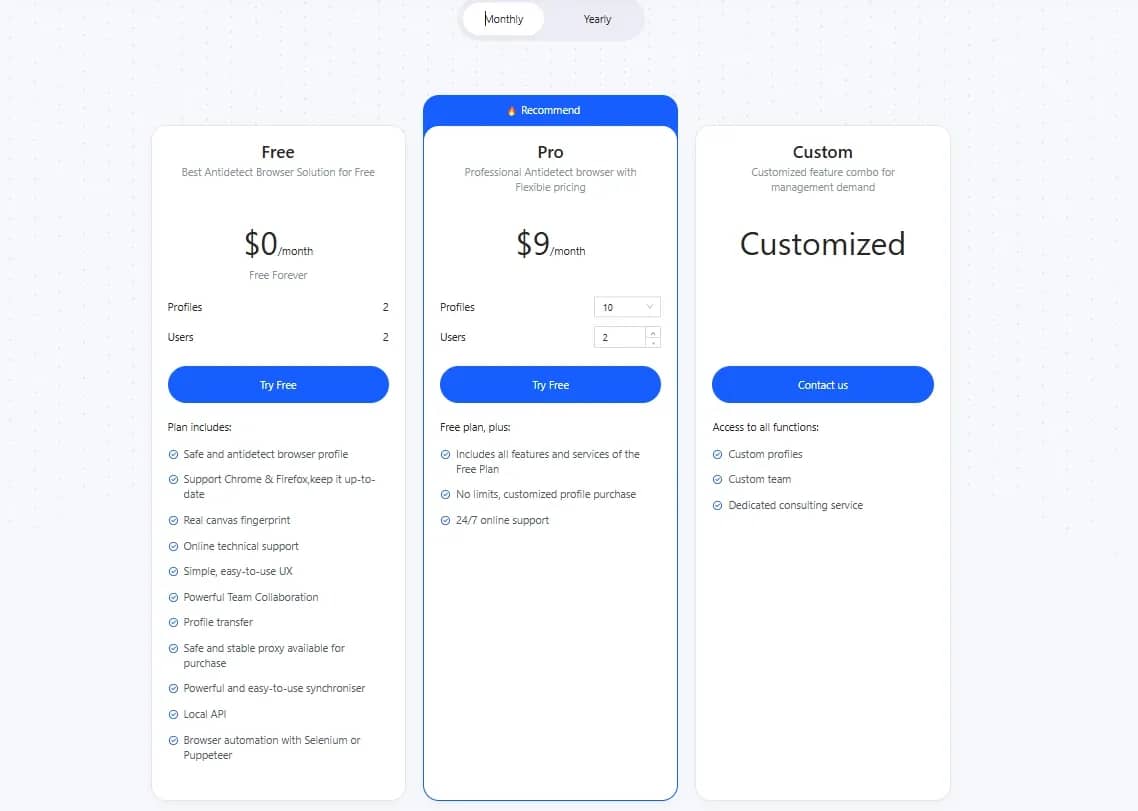
Key features of the MoreLogin free plan:
- 2 profiles free – basic access allows you to create two working profiles.
- Isolated profiles – each profile is launched as a separate environment with its own digital fingerprint (user agent, WebGL, Canvas, language, time zone, and other parameters do not intersect).
- Basic fingerprint configuration – key browser parameters can be changed without deep customization.
- Proxy support – connecting HTTP and SOCKS proxies to each profile.
- Cloud storage of profiles – access to profiles from different devices after authorization.
The free plan is suitable for testing the service and working with a small number of accounts. Scaling will require upgrading to a paid plan.
Incogniton
If you need a free anti detect browser to test the waters, Incogniton from European developers offers a generous initial limit, originally focusing on e-commerce. Releases are delayed and irregular.
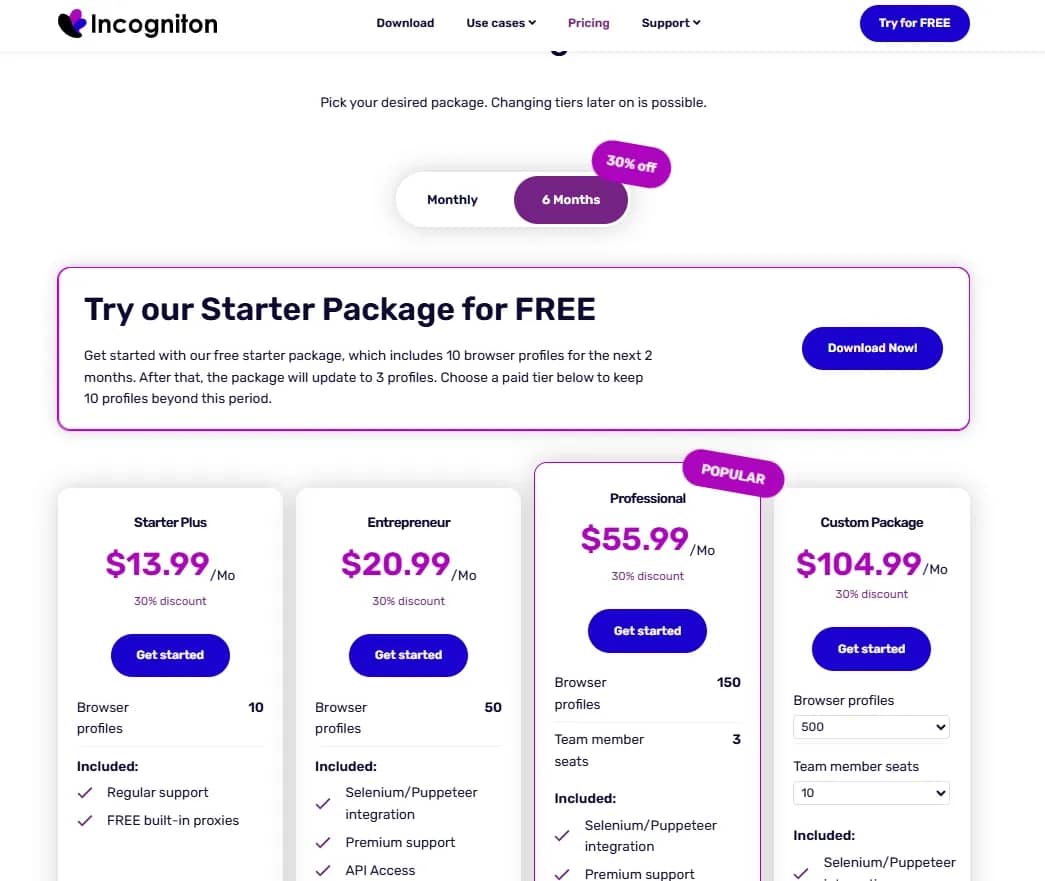
Key features of the Incogniton free plan:
- 10 profiles free at the start – extended access is provided only for a limited period (2 months), after which the conditions change.
- Browser parameter configuration – control of user agent, language, time zone, and other environment characteristics.
- Proxy support – connecting separate proxies to each profile.
An additional restriction should also be taken into account: if the user has logged in and then closed the browser, re-entry is possible only 30 minutes after the last login.
Switch Antidetect (myBOT)
Switch Antidetect is an antidetect browser from the myBOT project, which is positioned as an affordable solution for multi-accounting and bypassing basic anti-fraud checks. However, unlike proven solutions, there are almost no real reviews, feedback, or independent tests of Switch, and its technical documentation and reputation raise questions among experts. Timely support for Chrome updates is not implemented.
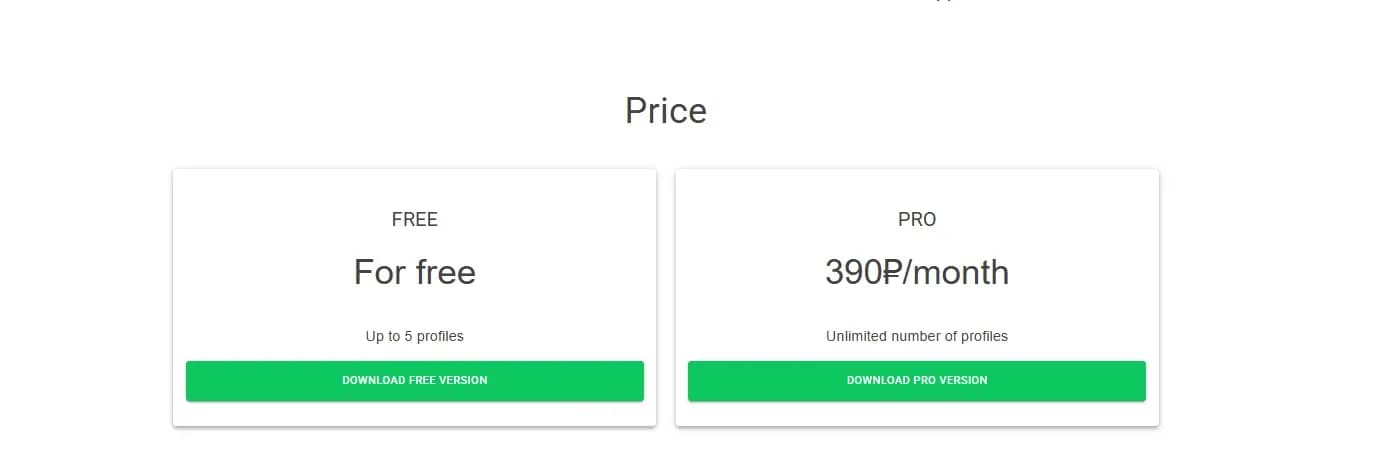
Key features of the free Switch Antidetect browser:
- Free plan with 5 profiles – access is available, but without clear guarantees of quality or stability.
- Works only under Windows – for other systems you will have to use emulators or virtual machines.
- Fingerprint spoofing is declared – they promise to mask browser parameters, but there are no objective results of independent tests.
- Minimum technical documentation – there are almost no descriptions of algorithms, updates, or detailed features on the official website or in open sources.
We do not recommend using the browser for working with advertising accounts. At most, for surfing the Internet and spoofing location to bypass regional restrictions.
Undetectable
For those searching for an anti detect browser free trial, Undetectable is promoted as a solid solution for multi-accounting and bypassing anti-fraud. The kernel is updated fairly quickly: within 7-10 days of the official release date.
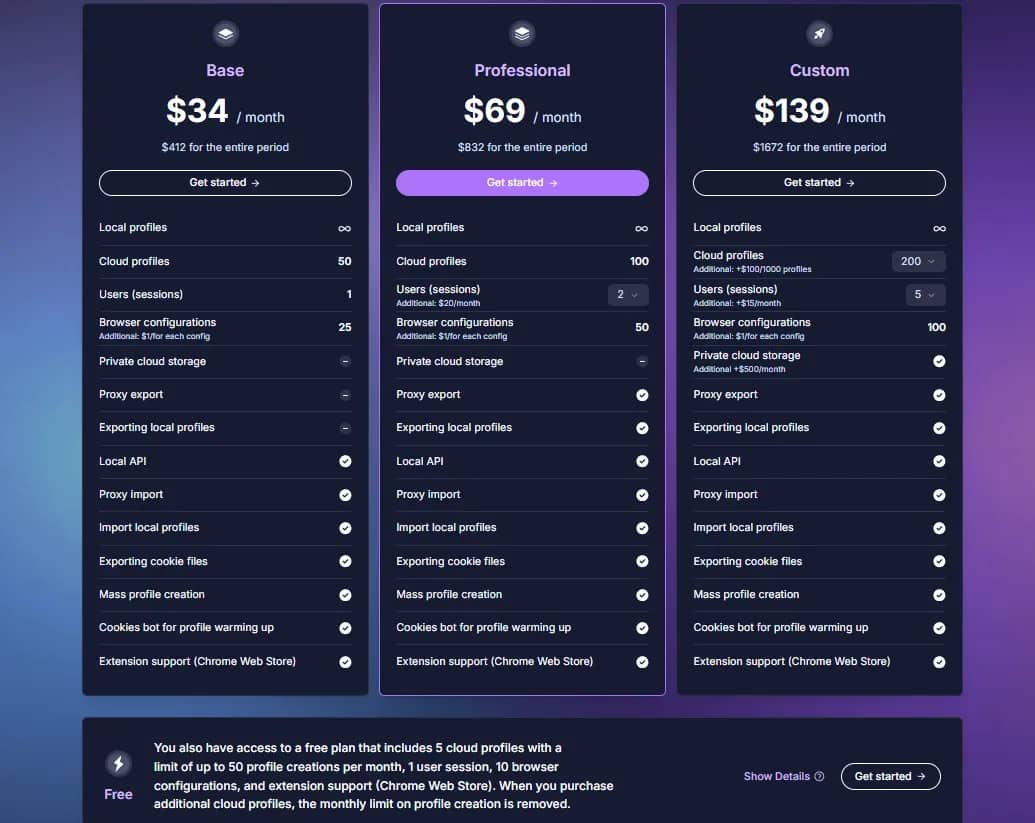
Key features of the Undetectable antidetect browser free trial:
- Creating separate profiles – allows you to run multiple accounts through different sessions, but the management system is extremely inconvenient.
- Basic spoofing of browser parameters – changing user agent, language, time zone, and some device characteristics. There is no deep fingerprint configuration.
- Proxy support – support for connecting HTTP and SOCKS proxies, but stability depends on the version and build.
- Local data storage – profiles are saved on the user's device without cloud synchronization.
- Minimal interface – functionality is limited, there are no additional tools for automation or teamwork.
- Lack of a developed ecosystem – no API, profile synchronizer, or advanced scaling tools.
Functionality is limited to basic tools without advanced settings and additional modules. This may be sufficient for simple tasks (bypassing regional blocking), but when working with advertising accounts, it is important to consider the level of protection and stability.
Dolphin Anty
Dolphin Anty is a popular Chromium-based antidetect browser that is actively used in arbitrage, SMM, and e-commerce. Chrome updates are released regularly.
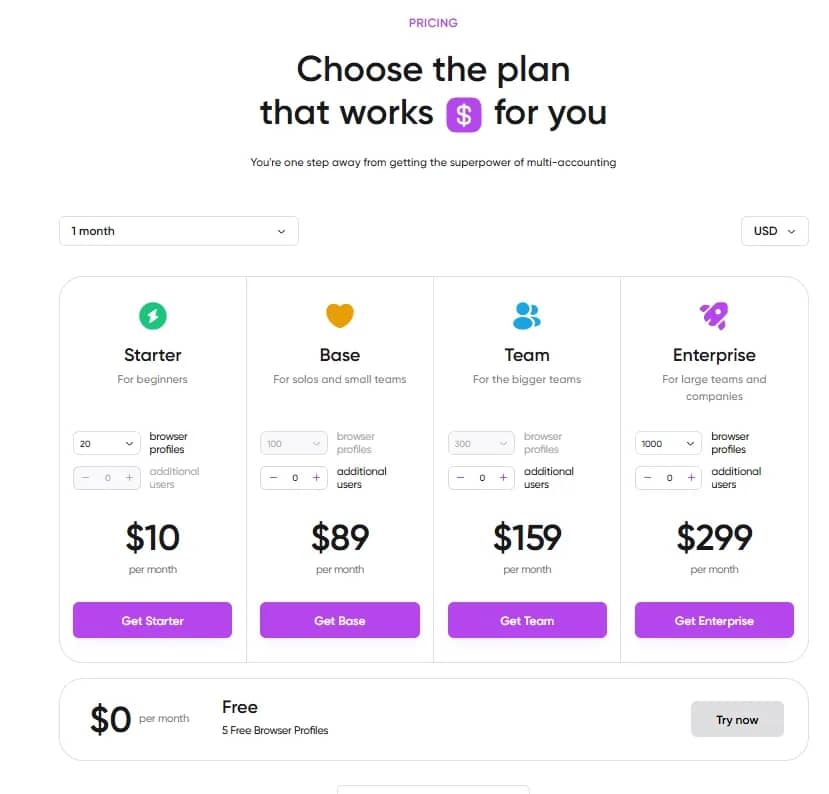
Key features of the Dolphin Anty free trial:
- 5 profiles for testing – the number of free profiles has been reduced by half since last year.
- Isolated profiles – each profile works as a separate browser with its own unique fingerprint: user agent, WebGL, language, time zone, and other parameters do not intersect between accounts.
- Proxy integration – support for various types of proxies for each profile.
- Profile synchronizer – allows you to duplicate actions from one profile to several others simultaneously.
- Cross-platform – works on Windows, macOS, and Linux.
Free access allows you to evaluate the functionality and stability of the service in real conditions before making a decision about upgrading to an extended plan.
Free vs Paid Antidetect
Getting an antidetect browser free of charge sounds appealing, but if you compare these basic plans with paid solutions (special plans, trial versions), the differences are obvious. If the product does not have a paid version, no trial, and no clear monetization model, then it does not have a sustainable financial base for development. And without constant investments, it is impossible to maintain the relevance of the kernel, refine fingerprints, and quickly respond to changes in anti-fraud systems.
Such solutions often use outdated Chromium builds, template or poorly developed fingerprints, there is no transparent history of updates and full technical support. The user is actually left alone with possible failures, blockages, or data leaks.
Therefore, if the task is limited to training or testing without the risk of losing an account or budget, a free option may be suitable. But if it comes to working with valuable accounts, saving on the tool almost always turns into higher costs.
When to Consider a Paid Version
A paid antidetect is justified in situations where:
- There are advertising budgets for Google Ads, Meta, TikTok - any accounts with prepayment.
- Accounts are expensive or farmed for a long time (marketplaces, payment systems, services with KYC, business pages).
- You need more profiles and high speed (mass operations, import, templates, tags, teams).
- Stability is important: fewer checks, predictable fingerprint behavior, fast kernel updates.
- Automation is needed (API, integrations, scripts).
Antidetect is an infrastructure. And like any infrastructure, it must be reliable. In serious work, a compromise on quality almost always costs more than a subscription.
How to Check the Correct Operation of an Antidetect Browser
Step 1. Checking the Digital Fingerprint. The profile is opened and checked on specialized services: Browserleaks, Pixelscan, AmiUnique, Whoer.net. Pay attention to the parameters of Canvas, WebGL, Audio fingerprint, fonts, language, and time zone. If the IP is from one country, and the time zone and language are from another, the discrepancy can be a trigger for the system.
Step 2. Checking IP and Leaks. The profile is checked through IP Leak, WebRTC Leak Test, and DNS leak test. You need to make sure that the real IP is not disclosed through WebRTC, DNS queries go through a proxy, and an active IPv6 connection is not displayed when working through an IPv4 proxy.
Step 3. Checking Profile Isolation. If two different profiles are opened and logged into the same website, the data from one account should not be displayed in the second: there should be no autologin, shared cookies, or overlapping cache and localStorage.
Step 4. Checking Fingerprint Stability. The profile is closed and opened again, then the fingerprint is checked again on the same services. The main parameters should not change for no reason. A jumping fingerprint looks suspicious to anti-fraud.
Step 5. Checking on Real Platforms. The final stage is logging in to real services: Google, Facebook, Instagram, advertising account. If mass captchas, warnings about suspicious logins, or additional checks immediately appear, then the profile is configured incorrectly or the antidetect is unstable.
Conclusion
Antidetect in 2026 is the basis for stable work with accounts and advertising. Free plans from large services are suitable for starting, but have limitations, and completely free solutions without a clear development model are always inferior in quality and updates. As long as it comes to tests and training, free access is enough. However, before you download antidetect browser software for serious tasks involving advertising budgets and valuable accounts, remember that it is no longer reasonable to save on the tool, it is no longer reasonable to save on the tool - the risks of blocking and losses are higher than the cost of a subscription.
Frequently asked questions
- For working with social networks (Facebook, Instagram, TikTok, X), it is better to choose solutions with a realistic fingerprint and high-quality profile isolation. It is important that the browser allows you to correctly configure the user agent, language, time zone, and connect a separate proxy to each profile.
- Yes, if it is a free plan or trial of a full-fledged service, and not a completely free browser. For example, Linken Sphere allows you to use 5 profiles for free without time limit. This is a full version with a working kernel and correct fingerprint spoofing. For a test launch of Google Ads, this limit is sufficient, so you can create a separate profile for each account and connect an individual proxy.
- It is important that the site sees only the IP of the proxy, and not your real address. Sometimes a browser can reveal the real IP through WebRTC technology or through DNS queries, even if the proxy is connected. Therefore, after creating a profile, you need to check it on IP analysis services and make sure that only the proxy address is displayed, and the IP country matches the language and time zone of the profile. If the site sees different countries or a real IP, this increases the risk of checks and blockages.
- If after restarting the profile its digital fingerprint remains the same, the site sees only the IP of your proxy, accounts do not intersect in cookies and localStorage, and there are no constant captchas and warnings about suspicious activity when logging in, then the profile is configured correctly.
- First of all, you should check the proxy - perhaps the IP is already on blacklists. Then you need to make sure that the fingerprint does not change with each launch and there is no conflict between the IP country, language, and time zone. Frequent captchas and warnings most often appear due to low-quality proxies, an outdated kernel, or a poorly configured profile.

How to Check Your Antidetect Browser for Fingerprint Leaks
Even the strongest antidetect setup can fail without testing. Fingerprint mismatches, automation traces, and hidden leaks often go unnoticed until it’s too late. This article shows why you should check antidetect browser, where users slip up, and which platforms can help you stay invisible.

Can You Have Multiple eBay Accounts? How to Manage Them Safely
eBay allows sellers to operate multiple accounts, provided each one follows its policies and maintains transparent activity. What began as a simple option for separating sales or audiences has evolved into a complex ecosystem where strategy, compliance, and reputation intertwine.

How to Buy a Domain Anonymously with Cryptocurrency — Best Services of 2026
If you need anonymous registration so that your name cannot be linked to the site, you need to choose not only a suitable registrar but also pay with cryptocurrency.