
How do anti-fraud system algorithms work?
Modern fraud is an industry with its own tools and role distribution. Carding, multi-accounting, ad fraud, bonus abuse, and refund schemes lead to financial losses and create reputational risks for businesses.
To protect against these threats, anti-fraud systems are used. These are technologies that analyze hundreds of parameters in fractions of a second: user behavior, the digital fingerprint of their device, network data, and transaction details. The main goal of anti-fraud is to accurately and quickly distinguish an ordinary user from a fraudster or automated bot.
In this article, we will break down exactly how modern protection systems are structured, what signals the algorithms look at, and why even the most advanced technologies cannot provide a 100% security guarantee.
What Is Anti-Fraud and Why Is It Needed?
Anti-fraud is a complex of technical and analytical tools that helps detect and block suspicious actions: fraudulent payments, fake registrations, bonus abuse, traffic manipulation, hacking attempts, and other anomalies.
Anti-fraud assesses the risk of each action and, at the moment of the operation, decides how to handle it: pass it through, check it additionally, or stop it.
In different industries, anti-fraud systems solve their own tasks, and working without them leads to specific problems:
In online stores, the main risks are payments with stolen cards, fake orders, and refund schemes. Without anti-fraud, businesses suffer direct financial losses from chargebacks: when the real owner of a stolen card contacts the bank, the seller loses both the goods and the revenue. Furthermore, the growth of fraudulent operations leads to sanctions from payment systems — from hefty fines to complete disconnection from card payment processing.
In the banking sector, transfers, cash withdrawals, and login attempts are analyzed. A vulnerable platform quickly attracts carders and hackers, which damages reputation: honest customers encounter fraud, lose trust in the service, and permanently switch to competitors.
In the advertising sphere, protection is needed to combat bots and junk traffic. Without it, advertising budgets are drained: they are instantly consumed by click fraud, generating beautiful reports with thousands of empty clicks that never bring real sales.
In iGaming and crypto niches, there is a high risk of bonus abuse, multi-accounting, and money laundering. Anti-fraud checks transactions and tracks linked accounts, preventing fraudsters from bypassing limits.
Ultimately, the protection system saves the company's money, preserves reputation, and maintains the platform's normal operation as a whole.
How Anti-Fraud Systems Work
Modern anti-fraud does not rely on a single signal. The system collects a set of parameters (from IP address and action history to user behavior on the site) and evaluates them together when making a decision.
The algorithm outputs a risk score — an assessment of the probability of fraud from 0 to 100.
- If the risk is low, the purchase or registration passes instantly.
- If it is medium, the system asks for additional verification (e.g., entering a code from an SMS).
- If it is high, the operation is blocked or sent for manual moderation.
Let's examine the main levels of data that the system analyzes.
Network Level and Infrastructure
The first filter evaluates where the user came from. Geolocation and network type are analyzed. For anti-fraud systems, there is a huge difference between home Wi-Fi from an ordinary provider and a server in a datacenter, a public VPN, or a Tor network node. The system also looks for logical inconsistencies. If the IP address is located in Germany, the bank card was issued in the USA, and the browser is operating in Russian — this is a clear reason for verification.
Device Digital Fingerprint
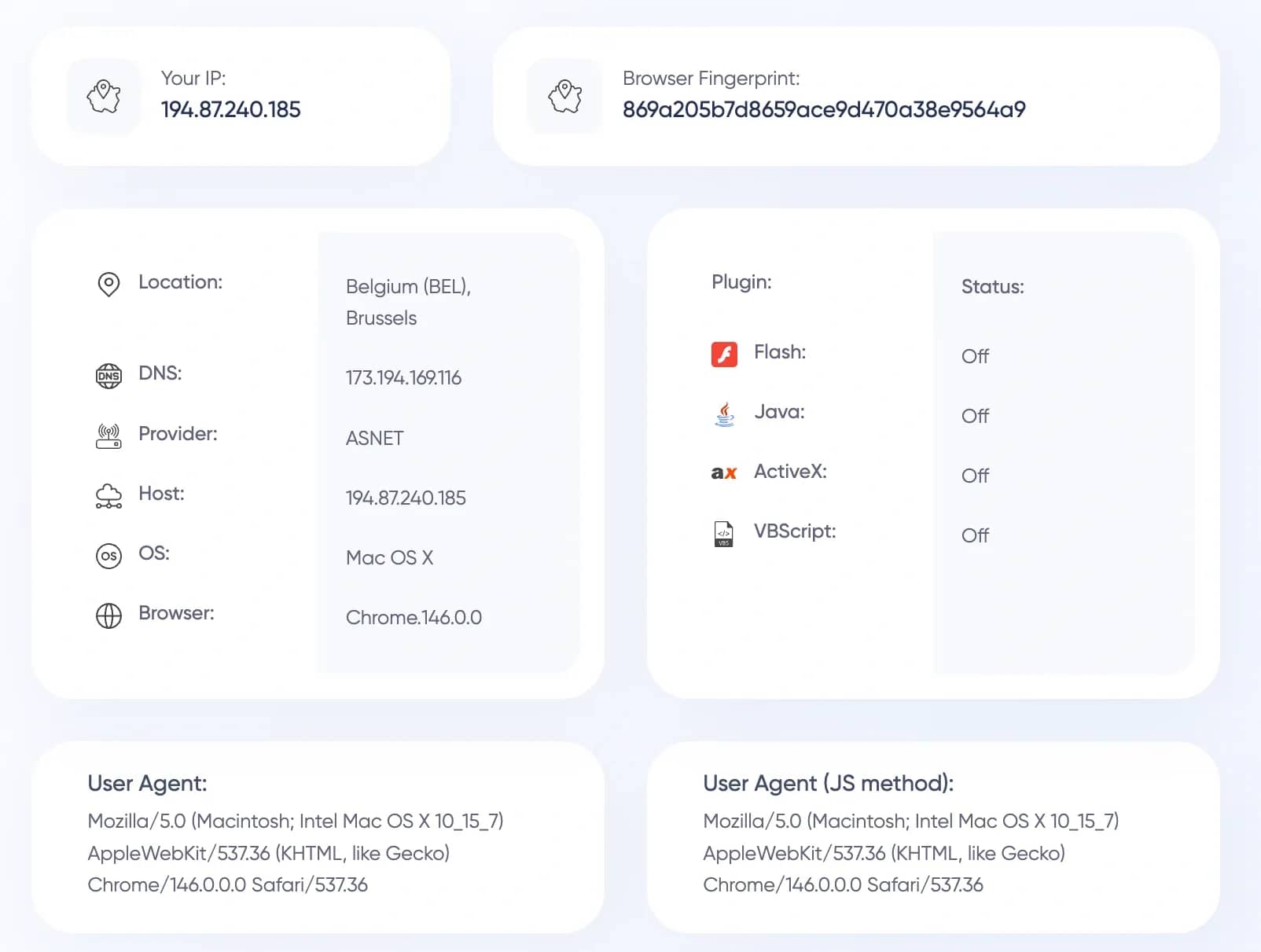
Clearing cookie files and using "Incognito" mode does not hide the user. Any device when connecting to a site transmits a mass of technical parameters:
- Operating system and browser versions;
- Screen resolution and graphics rendering peculiarities (Canvas and WebGL technologies);
- Lists of installed system fonts, plugins, and languages;
- Timezone and available media devices (cameras, microphones).
Individually, this data means nothing, but together they form a unique profile — the fingerprint. Using it, anti-fraud recognizes a specific smartphone or laptop even if the fraudster changes accounts and IP addresses.
Behavioral Biometrics
The system considers both device characteristics and user behavior. Behavioral analysis records typing speed, cursor movements, pauses between actions, and data input methods, including clipboard usage.
On mobile devices, gestures, screen interaction parameters, and sensor data are additionally analyzed.
Machine Learning and Link Analysis
Advanced anti-fraud systems use machine learning and graph analysis to search for connections between data. Algorithms compare devices, email addresses, phone numbers, cards, and behavioral patterns, building chains of dependencies.
If similar combinations of signs have already occurred in fraudulent scenarios, the system takes this experience into account when assessing risk. The accuracy of such solutions depends directly on the volume of accumulated data.
Methods of Bypassing Anti-Fraud
Anti-fraud and fraudulent schemes develop in parallel. As soon as protection systems implement new triggers, the shadow market finds ways to bypass or mask them. Today, fraudsters (as well as arbitrage specialists and bonus hunters) combine three key methods for successful bypass.
Substituting the network trail. Ordinary VPN services no longer work — anti-fraud easily recognizes their IP addresses and sends them to the block. Therefore, residential and mobile proxies are used for masking. They allow substituting the IP address with that of a real home Wi-Fi or mobile operator. To the protection system, such a user looks like an ordinary person sitting with a phone somewhere in Berlin or New York.
Imitating live behavior. Anti-fraud treats "empty" profiles with maximum suspicion. If a device has just appeared on the network and immediately tries to make a large-sum payment — this is a red flag.
To bypass this trigger, accounts are "warmed up" in advance. Using automated scripts or manual farming, a history is formed: visiting news sites, watching videos, clicking on links, collecting cookie files. The platform must believe that behind the screen is an ordinary, living person with their everyday interests.
Environment isolation and fingerprint substitution. Changing IP addresses and accumulating history is useless if you do it from the same computer.
The system will instantly identify you by your digital fingerprint (hardware, fonts, video card). To bypass protection, specialized programs are used that combine all the aforementioned methods into one.
Antidetect Browsers: The Main Bypass Tool
Antidetect browsers combine proxies, cookie isolation, and work with device digital fingerprints. Inside, you can create separate profiles, each with its own set of parameters that looks like an independent device.
When choosing a specific solution, several critical factors are considered:
Quality of substitution. The browser must correctly work with Canvas, WebGL, and font parameters, forming a natural digital fingerprint. This is achieved by changing values with consideration for realistic characteristics so that the final profile looks like an ordinary device.
Browser core update speed. The relevance of the browser core is an important parameter. If the version reported by the browser does not match the real engine version, the system records the inconsistency and increases the risk. Therefore, such solutions regularly update the core following official releases to keep parameters consistent.
Teamwork and automation. Support for API for connecting automation scripts that help build consistent account activity.
Among popular and proven solutions on the market, Linken Sphere, Dolphin{anty}, AdsPower, Octo Browser, and Indigo stand out. Each has its own specifics, but the essence remains unchanged: they create plausible digital identities.
Important! Even a combination of expensive mobile proxies, quality antidetect software, and warmed-up accounts does not provide 100% protection from detection. The smarter the machine learning models in anti-fraud, the more complex and expensive the infrastructure to bypass them becomes.
Conclusion
For an ordinary user, anti-fraud is basic protection for money and personal data. Yes, it sometimes causes inconvenience: it asks for a code from an SMS, a captcha, or may temporarily block an operation due to a non-standard purchase, for example, while traveling. But it is precisely these checks that reduce the risk of fraud.
Without anti-fraud, any services would quickly be filled with bots and fraudsters, and theft of funds would become the norm. Ultimately, these systems work in favor of ordinary users — they simply block most threats before you even notice them.
Frequently asked questions
- Not necessarily. But such signals may increase the risk level and lead to additional verification: a captcha, phone number confirmation, 3D Secure, or another form of verification.
- Any model can make mistakes, especially if the client's actions are atypical: a new country, unusual purchase, rare device, or non-standard behavior.
Why Google Blocks Accounts and What Your Antidetect Has to Do With It
Google has once again complicated the mechanisms of digital identification by deploying a new, more sophisticated layer of protection based on proprietary HTTP headers. This quiet change caught most of the market off guard, triggering a wave of rushed updates. While others hastily released superficial 'fixes', we realized that we were dealing not with a minor issue but with a fundamental shift that required deep and comprehensive analysis.

The Best Alternative to OBS Studio
Working with a webcam on many online platforms can turn into a real challenge. A strict oval or rectangular frame appears on the screen, but your image doesn’t align perfectly with it. As a result, the system blocks further progress, demanding perfect alignment, and your workflow is disrupted before it even begins.
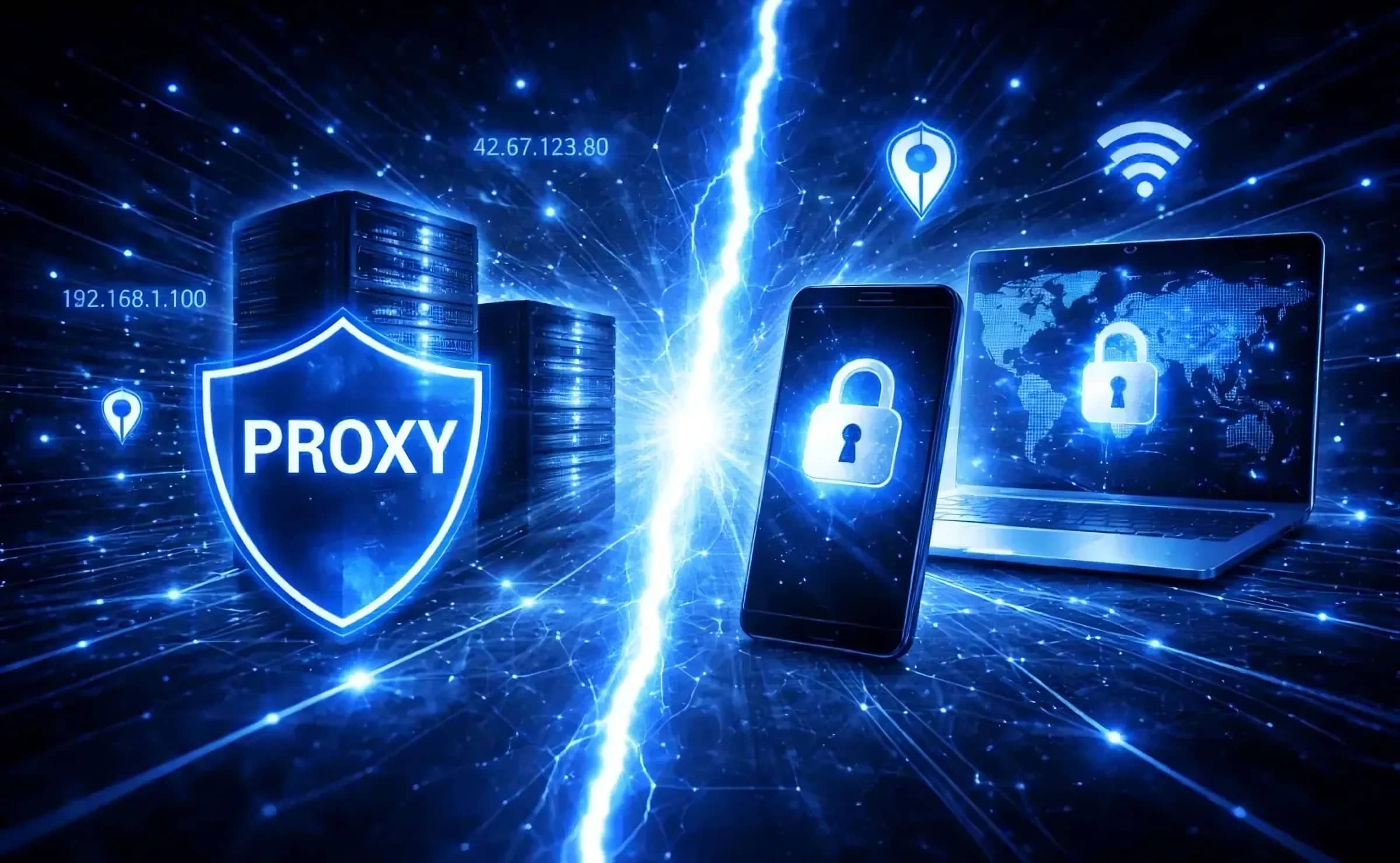
What is The Difference Between a VPN and a Proxy?
Let's figure out the differences between VPNs and proxies and how to choose the right one to protect your privacy.