
Betting in traffic arbitrage: making money on other people's bets
Betting is one of the most famous and popular verticals in traffic arbitrage. There is a constant demand for betting: matches and tournaments in various sports and esports take place all year round. However, this niche has high competition and strict restrictions from platforms. Therefore, to work, you need a reliable infrastructure: from a cloaker to an anti-detect.
In this article, we will figure out how traffic is driven to betting, what sources are used, and what tools are needed for this.
What is betting in traffic arbitrage
Betting in traffic arbitrage involves attracting users to bookmaker websites. To make a profit, you must bring an audience that will register and make a first deposit.
Betting is closely related to online casinos. Many advertisers use hybrid platforms where sports betting and casinos are available in one interface. This increases the player's LTV: the user comes for betting, then switches to slots or roulette and continues to spend money. Thanks to this cross-selling, overall revenue grows, so bookmakers are willing to pay webmasters higher rates.
Legal and illegal bookmakers: who to work with?
The market for bookmaker offers is divided into two segments: legal and offshore. Depending on the choice, the workflow will be built differently: the approach to driving traffic, GEO, traffic sources, and anonymity requirements.
Legal bookmakers are operators with an official license in a specific country. In Russia, these are operators working through ERAI/TSUPIS, in Ukraine — KRAIL, in other countries — companies with a local or international license.
Pros: high level of trust from players — money is protected by law. The websites of such bookmakers work stably, without blocks by internet providers. This simplifies the work; you can use official sources — placements with sports bloggers, search traffic, and contextual advertising. No complex technical infrastructure is required, and there are fewer risks of blocks and lost accounts.
Cons: mandatory KYC verification. The user needs to confirm their identity: upload documents or undergo video identification. At this stage, part of the traffic simply drops off, so the conversion rate from registration to deposit sags.
Payouts are also more modest: due to taxes and operating within the legal framework, legal bookmakers typically pay less on CPA than offshore offers.
Offshore bookmakers are companies with international licenses (Curacao, Malta, Isle of Man) that operate outside the local regulation of the target GEO.
Pros: a minimum of unnecessary steps. The user registers quickly, immediately funds the account via P2P or crypto, and does not encounter verifications. As a result, the conversion to deposit is noticeably higher.
Cons: such bookmakers are regularly blocked by providers, so you have to constantly change mirror links and monitor website availability. There are also sometimes problems with payment systems: not all methods work stably.
Traffic sources for betting, approaches, and creatives
In betting, you can drive traffic from any source: the main thing is that the traffic pays off and brings profit. Advertisers evaluate not only the volume but also the behavior of the players, including their recurring deposits.
For each source, a specific funnel is built, and separate creatives are made. Let's look at the main sources and popular approaches to creating creatives.
Facebook and Instagram
These are sources with massive volumes of a solvent audience. The main difficulty is strict moderation. Therefore, traffic is most often directed to mobile apps, including through WebView or PWA, and the offer itself is hidden behind a cloaker.
One of the popular approaches to creatives is the news format. It adapts to a specific event that is already hyped. A match, a fight, a final, or whatever is currently being discussed. The advertisement looks like a news piece or a quick breakdown, so it is not perceived as a direct offer and catches the eye better.
You need to make the entry as easy as possible. The click should lead either to an app or to a pre-lander with quick access to registration and deposit.
Additionally, a time limit can be specified. This cuts down the time for thinking and accelerates decision-making.
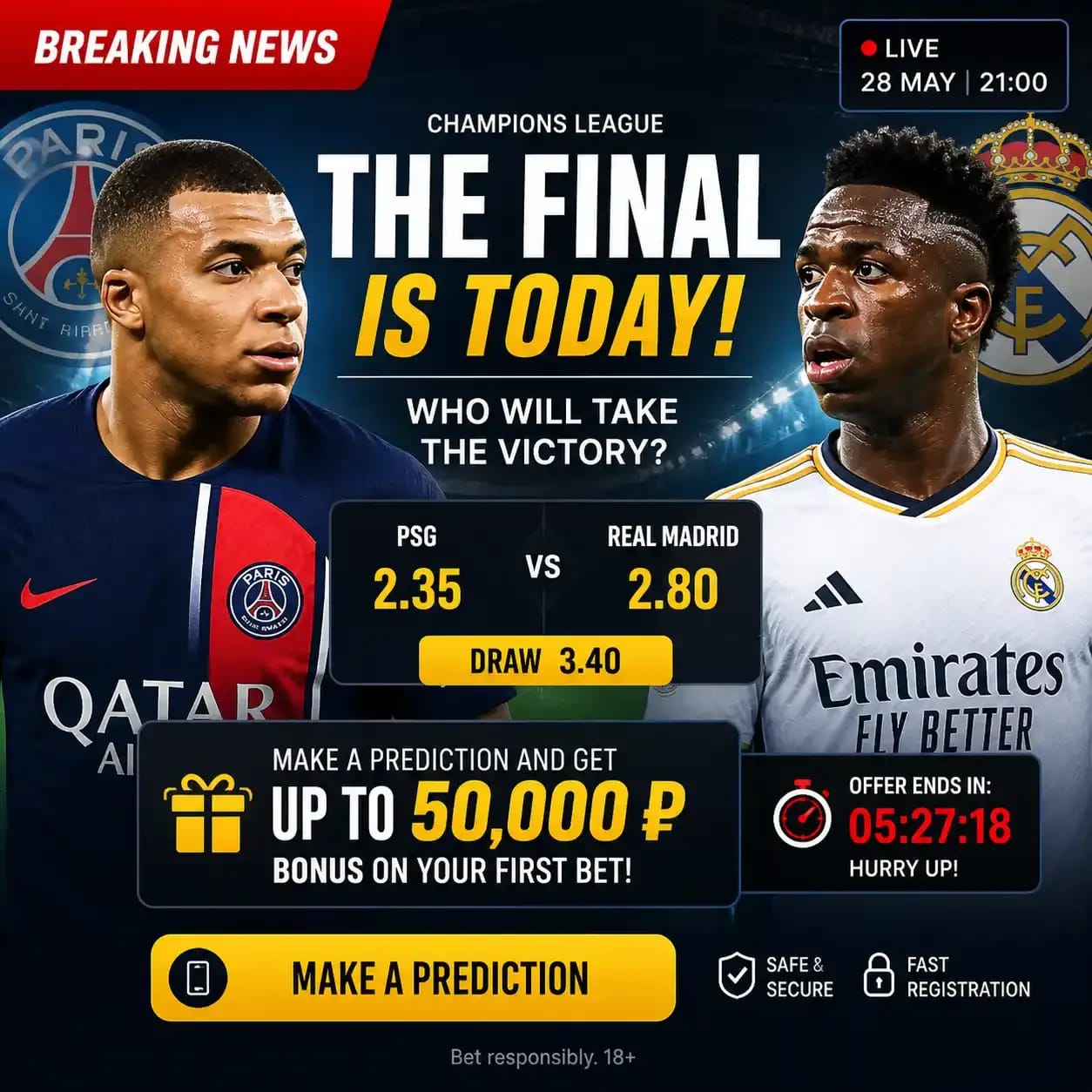
Dynamic videos are often used: a compilation of matches, over which winnings amounts or betting odds appear. At the end, a simple call to action is added — download the app and claim a registration bonus.
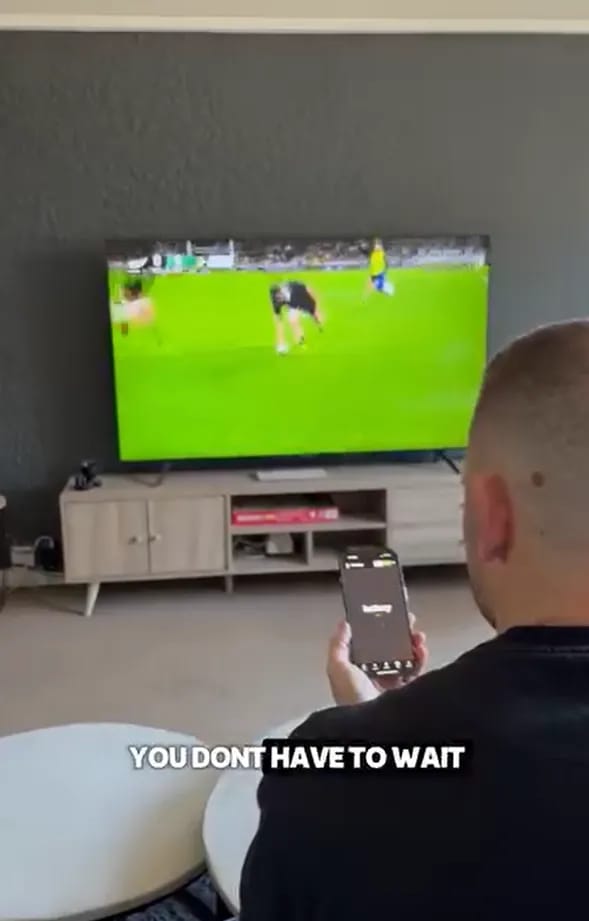
Google Ads (UAC and Search)
Google is an expensive source, but with strong returns. Within it, there are two types of traffic: search and algorithmic campaigns for apps. In the first case, the user arrives with a ready-made query: they are looking for a bookmaker, a bonus, or a bet. In the second, algorithms find the audience themselves and bring it in via video and banners.
Players return more often and generate profit over the long distance, so advertisers pay more for such traffic.
Google UAC — Universal App Campaigns. UAC runs on Google's algorithms: the system itself finds the audience and distributes impressions across its entire inventory: YouTube, Google Play, the Google Display Network, and other platforms. You do not need to manually manage targeting; the main focus is on creatives and in-app events.
The main task is to show that the app is simple and understandable. The user must see how everything works in a couple of seconds: fast opening, match selection, placing a bet, the result.
Short 10–15-second videos with a fast pace and a well-thought-out script perform best:
- interface display: match selection → placing a bet → winning;
- bonus animations: wheel of fortune, dropping a free bet;
- balance demonstration: amount growth, crediting funds;
- withdrawal process: "the money hit the card".
Search advertising — contextual. The traffic comes from already formed demand. The user self-enters the query: looking for a specific bookmaker, a bonus, or placing a bet on a match. Most often, they work with branded queries or target keywords like "sports betting online" and "free bet for registration".
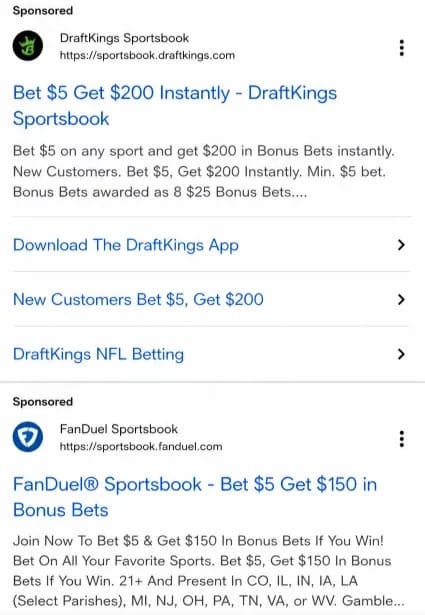
The ad should immediately answer the query and grab attention in the search results. The text emphasizes bonuses, a quick start, and current offers.
Conditionally Free Traffic (CFT)
Conditionally free traffic, or CFT, is a method of generating traffic without directly buying ads. Instead of paid ads, recommendation feeds are used.
The most popular format here is short vertical videos. Platform algorithms pick up the videos themselves, find the target audience, and distribute organic reach.
Popular CFT sources for betting:
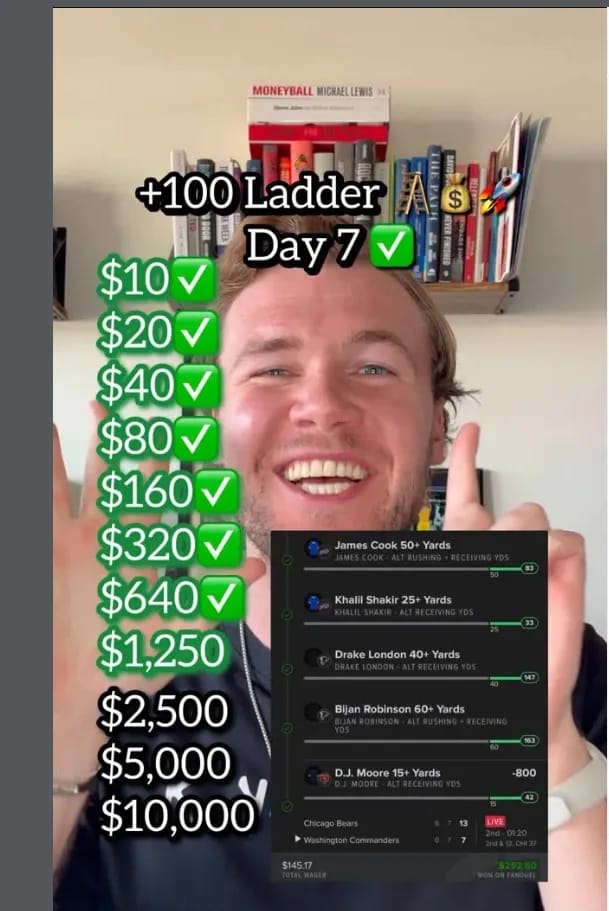
- TikTok is the main source of viral traffic. It distributes reach quickly, and videos can take off well even from new accounts. However, accounts do not live long, and work is done from a smartphone.
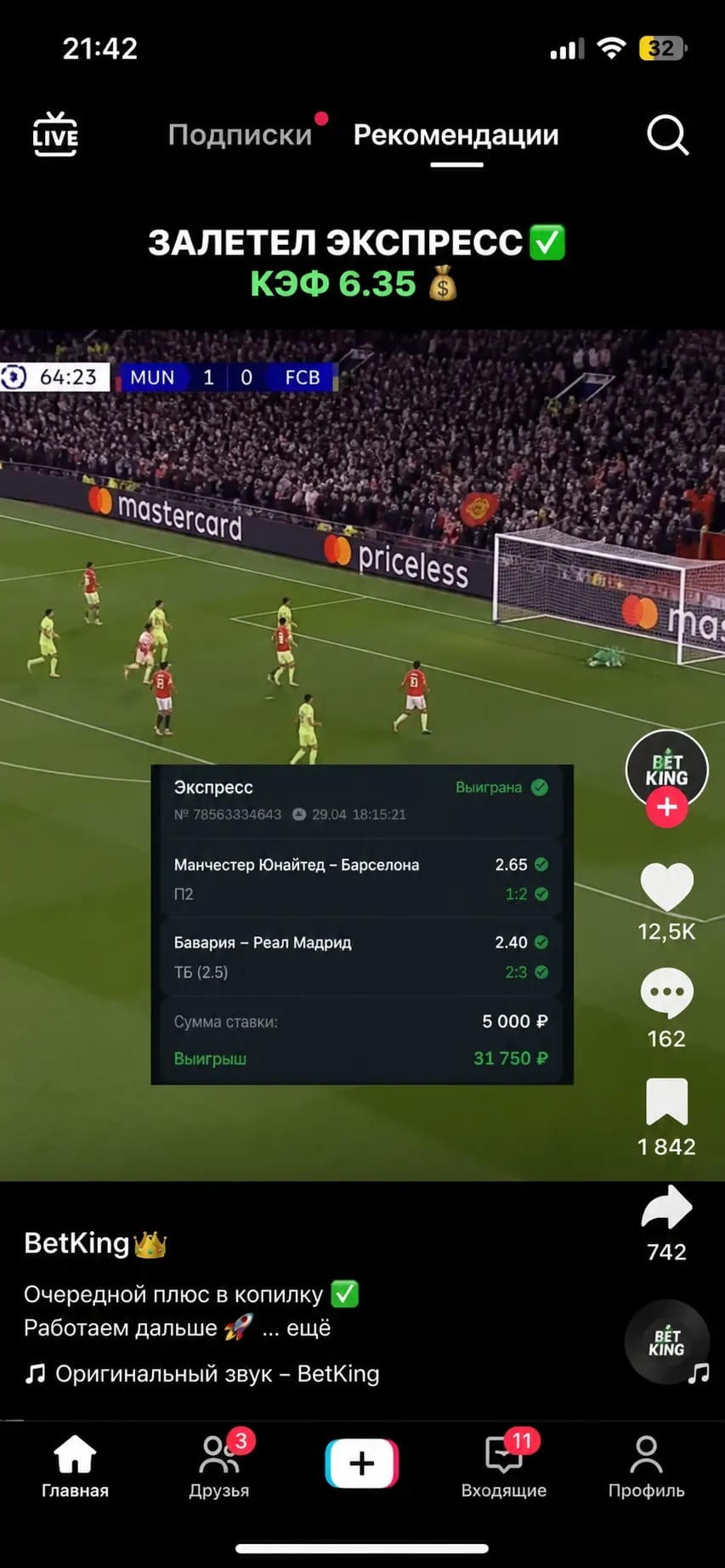
- YouTube Shorts — videos can blow up and gather a lot of views right from the first few hours. Some of them then continue circulating in recommendations and gradually accumulate traffic.
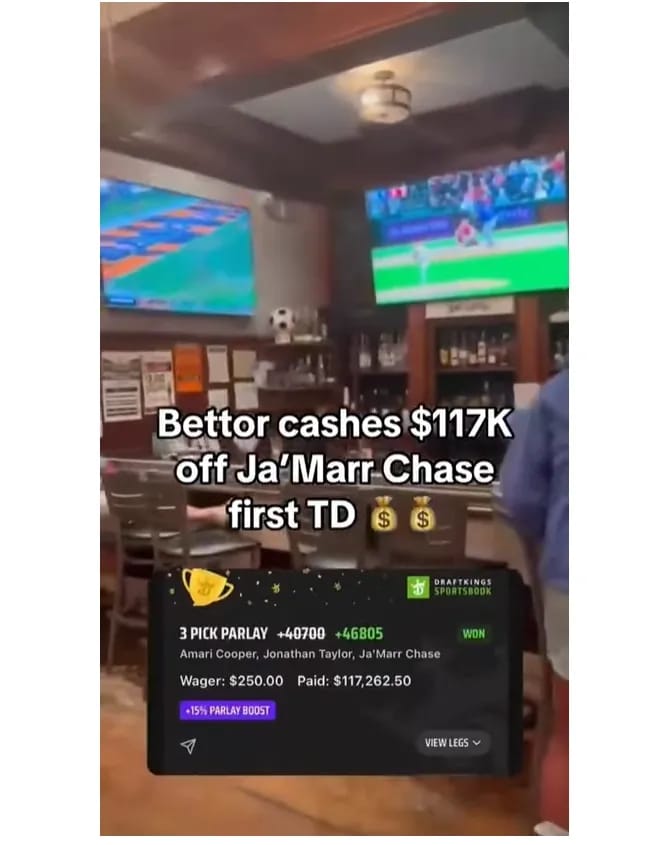
- Instagram Reels — an audience with money, responds well to visuals, lifestyle, and demonstrating results: money, emotions, the atmosphere of winning. Before launching traffic, it is important to warm up the account: scroll the feed, like posts, and publish a few neutral posts.
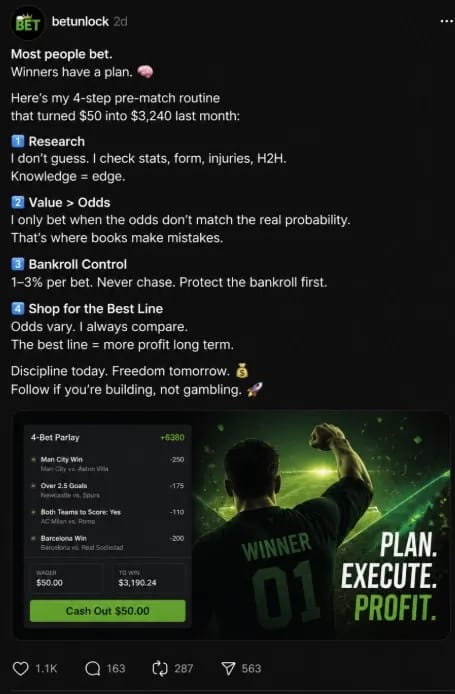
- Threads — a platform for text + visuals. Traffic is driven through networks of accounts: short threads with intrigue, clickbait, or insider info.
Influence Traffic
Influence traffic means buying ads directly from bloggers and streamers. The audience trusts their idol, so the conversion rate from a click to a deposit in this source is considered one of the highest in the market.
Influence traffic is divided into two large camps, each working according to its own rules and approaches.
Streamers (Twitch, Kick, YouTube Live). Streams provide a high level of engagement through live communication with the audience. Viewers react immediately, ask questions, and make decisions right during the broadcast. For betting, esports streams (CS2, Dota 2, FIFA) and the conversational ("just chatting") format are most often used. In both cases, it is convenient to show bets in real-time and involve viewers in the process.
Working approaches of streamers:
- Live betting. The highest converting format. During the broadcast, the streamer opens the bookmaker's website, places money on a match or tournament they are currently watching, and experiences the game along with the audience. Emotions are transmitted to the viewers, and many repeat the actions and also place bets.
- Overlays. A much calmer format. A banner with a promo code or link hangs on the stream. Meanwhile, a bot in the chat regularly reminds about the bonus and drops the link. Works without constant warm-ups; traffic is collected in the background.
- Interactives and giveaways. The streamer organizes a challenge: "If this team loses now, I will give away $500 among those who registered via my link and dropped a screenshot into the Telegram channel." This provides an explosive growth of first deposits in the moment.
Bloggers (YouTube, Instagram, Telegram). Here you can get huge reach, and the content itself lives longer, especially on YouTube. Bloggers have varied audiences, so suitable niches are chosen for betting: sports, cars, pranks, men's lifestyle.
Working approaches of bloggers:
- Direct integration. The classic format: the blogger inserts an ad at the beginning or in the middle of the video and directly voices the offer. Speaks about the bookmaker, the bonus, and the promo code, and leaves a link in the description or a pinned comment.
- Native lead-in. The ad is integrated into the content itself. Without a separate block: everything looks like part of the plot. For example, a car blogger talks about a car and mentions that they bought it with betting winnings, simultaneously showing the app on their phone.
- Special projects and shows. A separate format customized for a bookmaker. The blogger creates content where the brand is built into the idea: fights, challenges, competitions. Logos in the frame, mentions throughout the video, a prize pool from the partner.
SEO and ASO
While targeted ads and UBT yield quick leads, SEO and ASO work over the long distance. First, investments are made in a site or app: development, content, optimization. In about 3–6 months, the platform starts bringing organic traffic from search and the store.
Here, the user is already ready for action: they self-enter a query like "download betting app" or "where is the best place to bet on football."
SEO in betting is divided into several approaches.
- Review sites. The most expensive and time-consuming approach. Full-fledged sites are made with bookmaker reviews, articles, and forecasts. The main focus is on site structure, target queries, and links. Traffic comes from search, then the user compares options, sees a bonus, and clicks the link.
- Event sites. Small websites targeted at specific queries like "watch Champions League final online." They provide a rapid influx of traffic during a match. A player and banners with a call to place a bet are usually posted.
- Doorways. Mass websites targeted at low-frequency queries. Generated automatically, they index quickly, collect traffic, and funnel it to the bookmaker. They don't live long and are often permanently banned.
ASO is SEO inside Google Play and the App Store. A user searches for a bookmaker right in the store by brand or general queries.
An app is taken for the store (this can be WebView/PWA or a full-fledged native app) and optimized for the necessary queries: title, description, keywords.
Next, the app is promoted in the store's search results. To do this, installs and reviews are artificially boosted at the start.
Betting Affiliate Networks
There are two types of cooperation with bookmakers.
- Working with a direct advertiser. You work directly with a bookmaker without intermediaries. The main advantage: maximum rate for CPA or RevShare. The main disadvantage: strict demands on traffic volumes and quality, as well as being tied to only one brand.
- Working through a CPA network. Platforms that harbor offers from different bookmakers for any GEO.
It is better for beginners to work through affiliate networks — affiliate managers will advise and help at the start; it is in their interest to nurture webmasters.
Payment models in betting
Bookmakers work according to three main models. The choice depends on your financial capabilities and traffic quality.
CPA (Cost Per Action) — a fixed payment per action. The most popular model among arbitrageurs, where you receive a fixed sum for the user's targeted action. In offshore markets, CPA rates can reach $50–150 per lead depending on the country.
The advertiser does not pay for empty registrations and often introduces a baseline — a minimum deposit amount the user must deposit in total for the lead to be counted.
RevShare (Revenue Share) — a share of the profit. This is a long-term play, where the bookmaker shares the net profit received from the attracted players with you. Your share usually ranges from 20% to 60% throughout the player's entire lifecycle on the platform.
Hybrid (hybrid model). A hybrid is a combination of a one-time payout and a revenue share from the player. A fixed amount is given for the first deposit, which partially covers traffic costs. Then, a percentage from the player's activity remains, but it is lower than with pure RevShare.
What tools are needed to drive betting traffic
For any vertical in traffic arbitrage, a reliable infrastructure is needed.
Anti-detect browser. Without a high-quality anti-detect of the Linken Sphere level, arbitrage on platforms like Facebook or Google Ads is practically impossible. Ad networks collect hundreds of parameters about your device and easily track down all your accounts. An anti-detect browser spoofs this digital footprint.
Thanks to the anti-detect, the farming department can prepare trusted accounts and pass them on to media buyers in a couple of clicks without resending logins and passwords. All work is conducted through cloud synchronization of profiles with defined access rights settings.
Proxies: mobile and residential. For betting, high-quality mobile or residential proxies are essential, where the GEO strictly matches the GEO of your ad account.
Tracker. This is a tool for accounting, distributing, and analyzing traffic. In arbitrage, it is crucial to understand which funnels yield results and which don't pay off. A tracker collects and analyzes data across all stages of the funnel and distributes user flows. For example, a tracker will direct Android users to download an APK file, and iOS users to an adapted mobile landing page.
Cloaker. Cloaking is a traffic filtering technology used to bypass moderation. Advertising offshore bookmakers directly in Google or Facebook is prohibited by the rules. A cloaker solves this problem by analyzing each incoming user.
When a network moderator or reviewing bot clicks on the ad link, the system shows them a white page — for example, a harmless blog about sports nutrition or fitness, which completely complies with platform policies. But when a target user from the correct GEO and device clicks the same link, the cloaker instantly redirects them to the targeted sales landing page of the bookmaker. Today, bot-filtering functionality is often already built into top trackers.
Apps. When working with Facebook Ads, UAC, and in-app networks, traffic is most often directed to apps. They can be obtained from affiliate networks, developed independently, or purchased.
- WebView apps. Hosted on Google Play or the App Store. On the outside, they look like regular utilities or games. For the user, the mobile version of the bookmaker's site opens inside. Convenient for a quick launch and scaling.
- PWA (Progressive Web Apps). Installed straight from the browser. Visually similar to native apps, but independent of the store. They do not drop off due to bans and do not require republication.
- Native apps. Full-fledged apps built specifically for Android or iOS. Inside, they have their own interface and business logic without loading a website. They are faster, look like a standalone product, and inspire more trust in the user.
Build your infrastructure correctly right from the start, and profit won't take long to follow.
Conclusion
Betting is a high-risk, highly competitive niche. Campaign funnels burn out quickly, accounts are banned, and platform policies constantly change. A reliable anti-detect browser, high-quality proxies, and a properly configured cloaker are the minimum toolkit. Beyond that, everything rests on the bundle: the source, creative, and funnel. If one element isn't working, the entire model goes into the negative.
Why Google Blocks Accounts and What Your Antidetect Has to Do With It
Google has once again complicated the mechanisms of digital identification by deploying a new, more sophisticated layer of protection based on proprietary HTTP headers. This quiet change caught most of the market off guard, triggering a wave of rushed updates. While others hastily released superficial 'fixes', we realized that we were dealing not with a minor issue but with a fundamental shift that required deep and comprehensive analysis.
SOCKS vs HTTP Proxy: What’s the Real Difference and Which One to Choose?
There are times when you don’t want a website to link the request back to your device. That’s where a proxy comes in, it acts like a middle layer and sends the request for you. The site sees the proxy’s info instead of yours. It’s a go-to trick when you’re trying to see a page that’s not available in your region, pull content that’s restricted by location, or avoid hitting a wall when sending lots of requests.
The Best Alternative to OBS Studio
Working with a webcam on many online platforms can turn into a real challenge. A strict oval or rectangular frame appears on the screen, but your image doesn’t align perfectly with it. As a result, the system blocks further progress, demanding perfect alignment, and your workflow is disrupted before it even begins.