
Top 7 Cloaking Services for Traffic Arbitrage
Algorithms of Facebook, Google Ads, and TikTok analyze landing pages daily for compliance with ad network policies. Working with grey hat verticals or aggressive creatives without cloaking inevitably leads to campaign halts and bans.
Cloaking is a traffic distribution technology that shows moderators and bots a safe white page, while presenting the real offer to target users. A cloaking service filters out unwanted visits based on IP addresses, browser signatures, user agents, and geolocation.
To avoid losing consumables and to protect working setups, a webmaster needs a reliable tool. In this article, we analyzed the best cloaking services for traffic arbitrage in 2026, comparing their functionality, cloaking methods, and pricing.
TOP 7 Cloaking Services in 2026
Cloaking.House
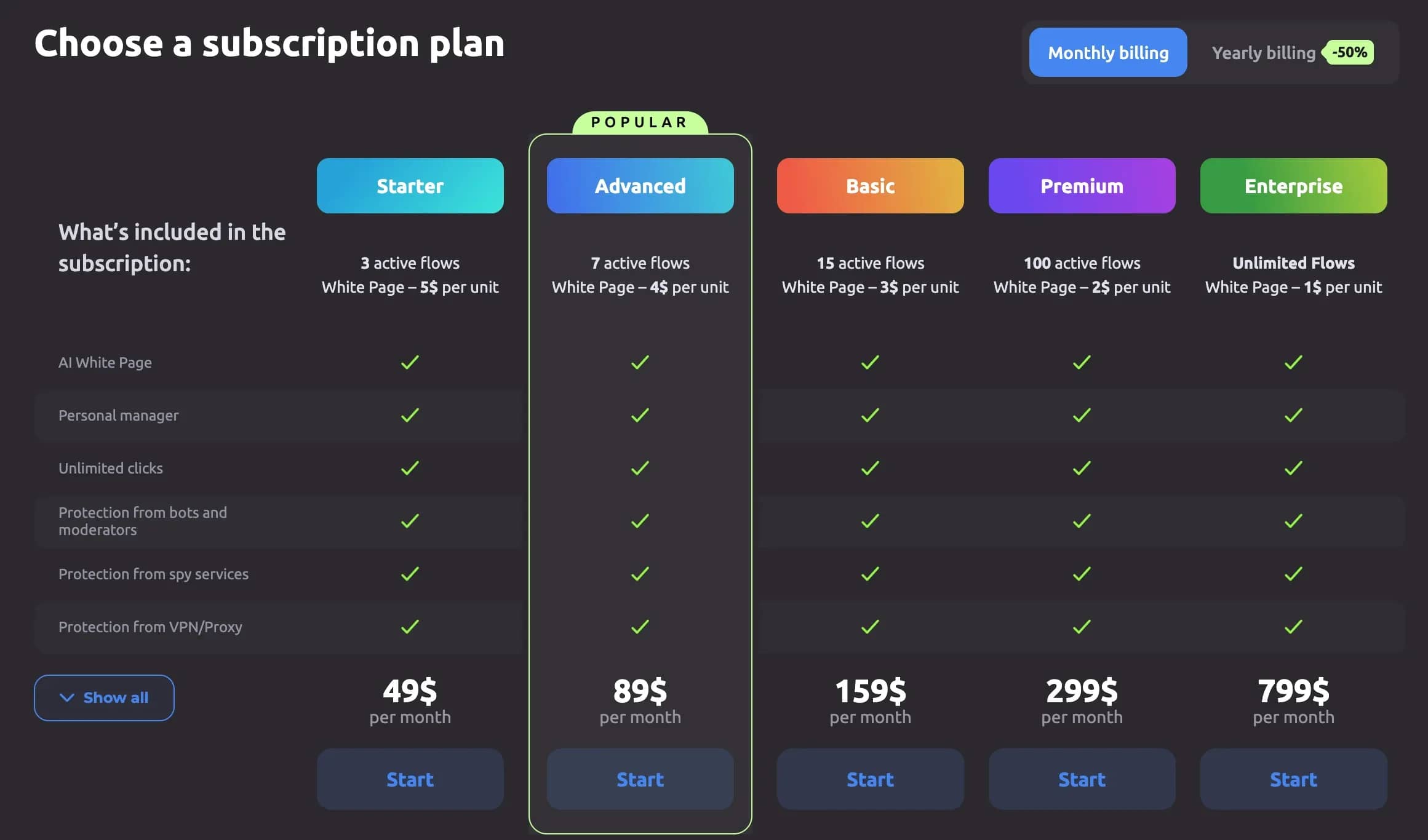
A cloud-based service for traffic filtering and cloaking based on machine learning, developed by the House Group team. It specializes in working with Facebook, Google Ads, TikTok, and Yandex. Due to its ease of setup and the lack of need to run dedicated servers, it has become one of the most popular solutions on the market.
Key features: ML filtering of bots and moderators, built-in AI white page generator, detailed real-time visit analytics, flexible IP/ASN blacklisting and whitelisting.
Integration types: PHP script, JavaScript, WebView, WordPress integration.
Trial: a free 7-day trial period with full functionality is available.
Who it suits: beginners and solo webmasters due to its simple interface and quick launch without coding skills.
Adspect
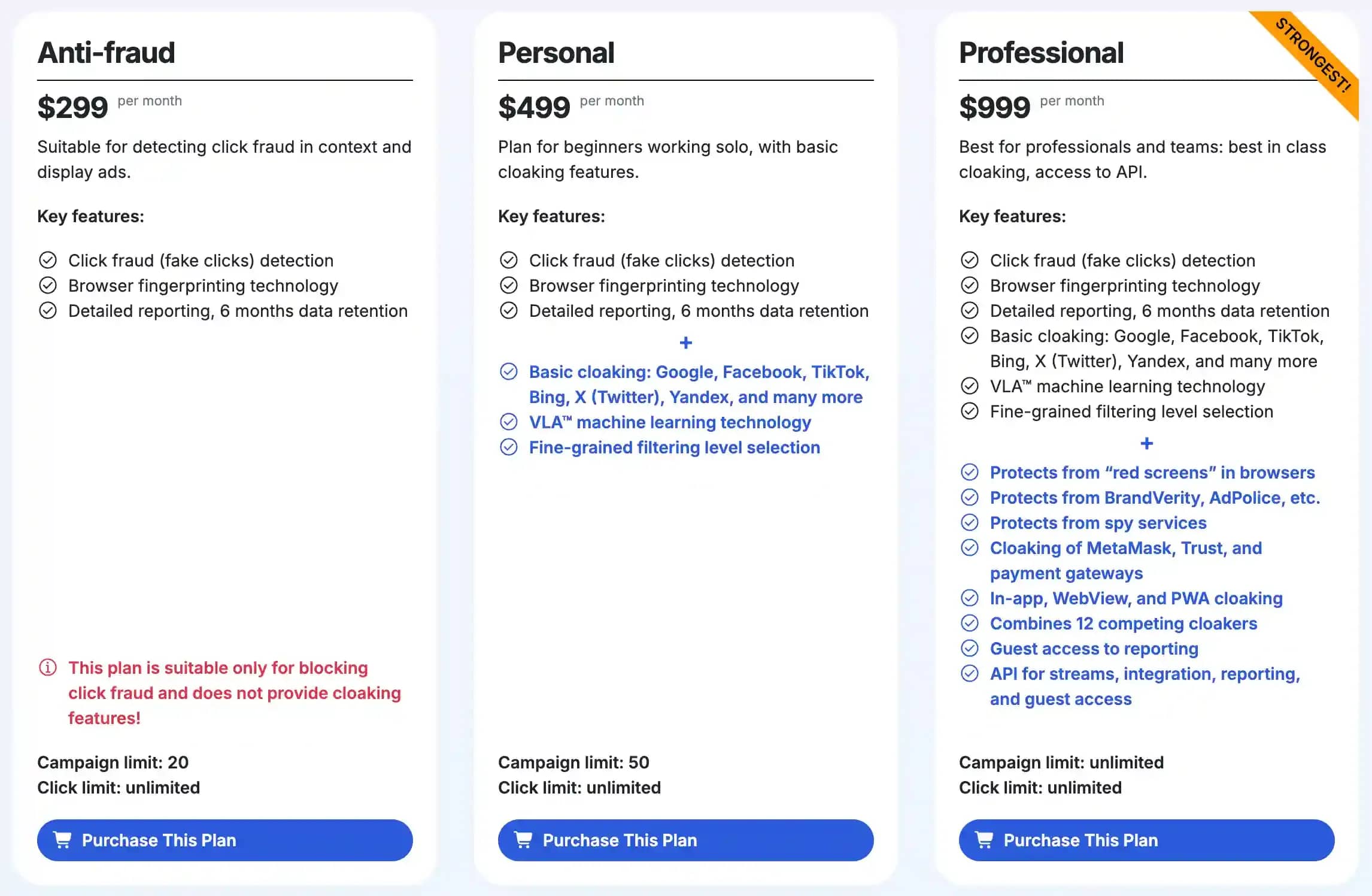
A premium traffic filtering and anti-fraud system designed for high volume in Facebook, Google Ads, TikTok, and Bing. The service combines the features of a professional cloaker, site generator, and tracker.
Key features: two-stage filtering (VFP fingerprinting + Bayes machine learning), built-in white page generator that creates full websites on the fly, built-in TDS tracker supporting target page rotation.
Integration types: PHP script, JS delivery, API integration.
Trial: no trial period is provided.
Who it suits: professional media buying teams and buyers with large budgets requiring maximum protection from manual and automated moderation.
hoax.tech
A high-tech cloaking service utilizing its proprietary Matchex fingerprinting and behavioral analysis system. It is tailored for strict anti-fraud systems of Google Ads and Facebook.
Key features: deep scanning of browser parameters via JavaScript, detection of emulators and headless browsers of moderators, protection against spy services, ability to dynamically swap content without redirects.
Integration types: PHP, JS integration, WebView for mobile apps.
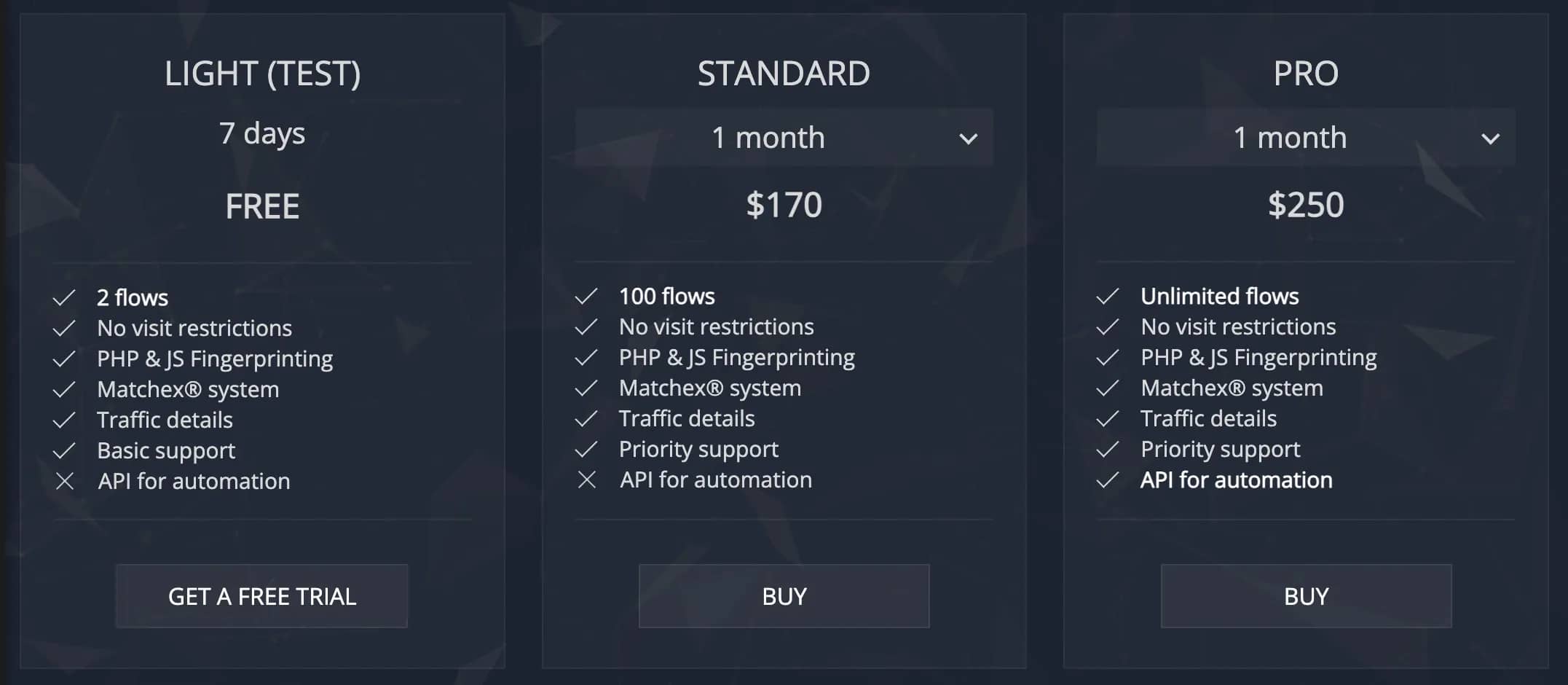
Trial: full 7-day trial period.
Who it suits: teams working with search traffic and highly competitive grey hat niches.
Rokies (formerly Cloud Filter)
A cloud-based cloaking service focusing on automated filtering of unwanted visits using artificial intelligence.
Key features: constantly updated cloud-based bot database, minimal request processing latency, convenient notifications about bans and campaign status changes via Telegram bot.
Integration types: PHP script, JS, Cloudflare Workers.
Price: from $99/mo.
Trial: 3-day free trial period available.
Who it suits: webmasters using Cloudflare as the core infrastructure for hosting landing pages.
Traffic Armor
An American premium-level traffic filtering service. It possesses one of the largest and oldest databases of corporate IP addresses belonging to research companies, moderators, and spy tools.
Key features: granular blocking rule configuration (by ISP, IP range, User-Agent, referer), blocking ad network moderators worldwide, flexible redirection logic.
Integration types: PHP, JS, redirects.
Trial: none.
Who it suits: specialists running international/tier-1 traffic through Google Ads and non-standard ad networks.
Legion
An affordable and flexible traffic filtering solution targeted at both beginner buyers and small teams.
Key features: user-friendly rule builder, fast blacklist filtering, real-time click tracking, low hosting load.
Integration types: PHP script, JS.
Price: from $40/mo.
Trial: 3 days of free access.
Who it suits: beginner arbitrageurs with a limited software budget.
AlterCPA One
A cloud-based traffic filtering service with an integrated IP database and tracking system from the developers of the AlterCPA ecosystem.
Key features: protection against bots, moderators, and spy tools, compatibility with affiliate networks, minimal technical knowledge required for setup.
Integration types: PHP, JS, built-in parsers.
Trial: trial period available.
Who it suits: webmasters already using AlterCPA products or looking for an all-in-one cloud solution.
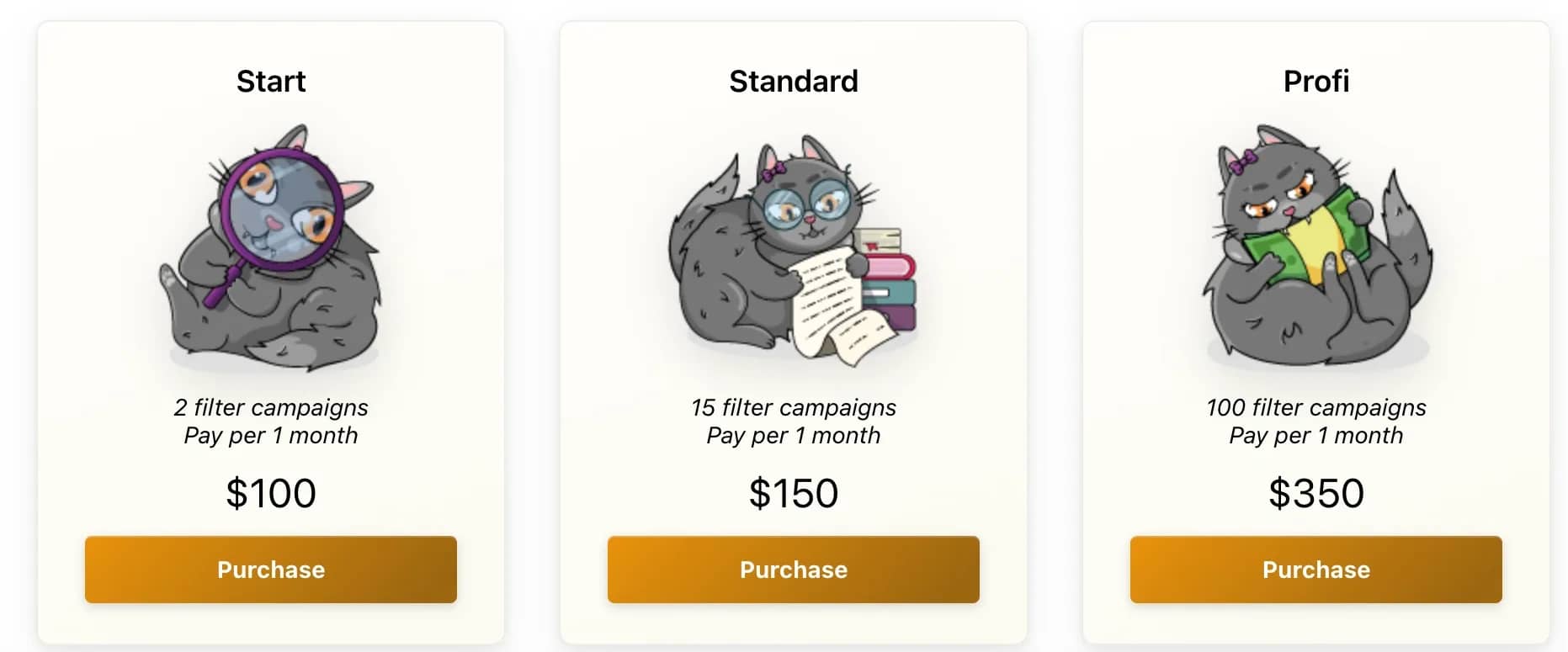
Budget-Friendly and Free Options
For testing, starting out, or operating under strict budget constraints, there are specialized free and ultra-budget solutions:
- Bhole.Space: a minimalist cloud filter by the Fair-Play team. Pricing from $25/mo, redirects links based on set rules and a basic bot list.
- Axetra.io: a young cloud service with basic cloaking and traffic filtering functionality starting at $10/mo.
- LP-Cloak: a service script for local page swapping with a basic free plan.
- YellowCloaker: a free custom cloaking script by arbitrage blogger Yellow Web. It runs on PHP, requires manual IP database updates, but is completely free and open-source.
Cloaking Services Comparison Table
| Service | Price per month | Free trial | Integration types | ML / AI filtering | Built-in white generator | Main traffic sources |
| Cloaking.House | from $49 | 7 days | PHP, JS, WebView, WP | Yes | Yes (AI) | FB, Google, TikTok, Yandex |
| Adspect | from $499 | No | PHP, JS, API | Yes (VFP + Bayes) | Yes | FB, Google, TikTok, Bing |
| hoax.tech | from $170 | 7 days | PHP, JS, WebView | Yes (Matchex) | No | Google Ads, FB |
| Rokies | from $99 | 3 days | PHP, JS, Cloudflare | Yes | No | FB, Google Ads |
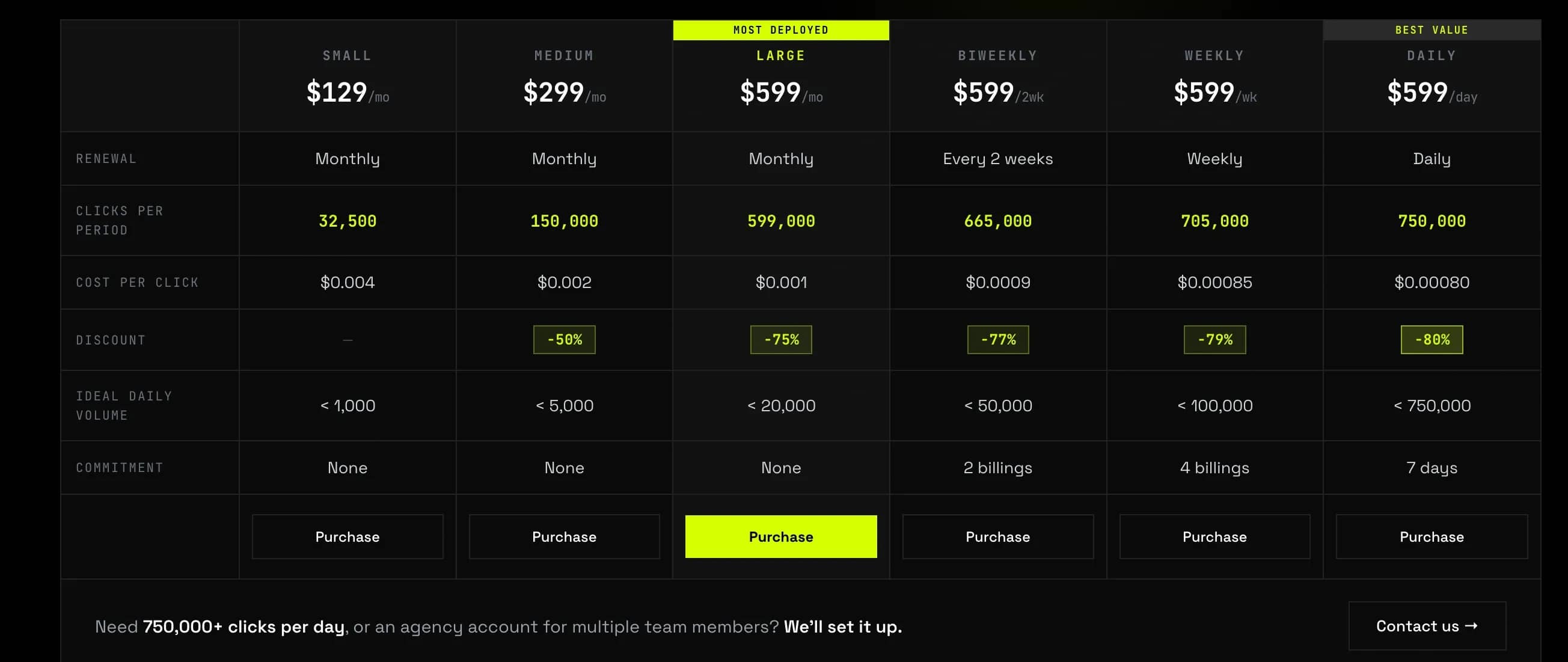
| Traffic Armor | from $129 | No | PHP, JS, Redirection | No (rule and DB based) | No | Google Ads, Native, FB |
| Legion | from $40 | 3 days | PHP, JS | No | No | Any sources |
| AlterCPA One | from $100 | Yes | PHP, JS | Yes | No | FB, Google |
How to Choose a Cloaking Service: A Checklist for Arbitrageurs
When choosing a traffic filtering tool, rely on the following criteria:
- Update frequency of IP and signature databases. Facebook and Google moderators regularly change IP ranges and update browser emulators. The service must update its databases automatically on a daily basis.
- Request processing speed. When using cloud cloaking, latency before page load should not exceed 50–100 ms. Every extra second of redirect delay reduces conversion rates by 10–15%.
- Support for your traffic source. Make sure the service can handle anti-fraud algorithms of your specific platform (for instance, Google emulators require JS fingerprinting, while Facebook requires support for IPv6 and mobile operator subnets).
- Visit logging. Having detailed logs for every click (indicating the reason for blocking or allowing) helps quickly understand why an account received a check or ban.
- Compatibility with your tracker. Check how easily the cloaker integrates with Keitaro, Binom, or Voluum without issues in SubID and conversion metric pass-through.
- Support quality and update activity. Check the service’s social media and Telegram channels. If no releases have been published in the last six months, the tool's databases are likely outdated.
Golden budget rule: if your monthly ad budget exceeds $3,000–$5,000, a professional cloaking service pays for itself by protecting just one or two high-trust accounts. At high volumes, the key factor is not subscription cost, but bot detection accuracy.
Conclusion
Choosing a cloaking service in 2026 directly depends on your experience, traffic source, and budget:
- For a quick start and medium volumes, Cloaking.House or Rokies are great choices — they require no complex server setup and offer affordable plans.
- For large teams and high volumes in Google Ads, TikTok, and FB, professional solutions with neural network filtering — such as Adspect or hoax.tech — are optimal.
Frequently asked questions
- Cloaking is a traffic distribution technology that shows ad network moderators and search engine bots a safe page compliant with all rules, while target users see a selling landing page or pre-lander.
- For white hat offers, cloaking in the traditional sense is not required. However, filtering services are often used even on white setups: to protect landing pages from being ripped by spy tools, block bot traffic, and prevent click fraud.
- Yes, if you are capable of independently gathering, updating, and filtering millions of IP addresses belonging to moderators, data centers, and VPNs, as well as writing JavaScript fingerprint verification algorithms. In reality, maintaining such a database single-handedly is unprofitable, making ready-made services simpler and cheaper.
- No, no service provides a 100% guarantee. Account bans occur not only due to detecting the target page, but also because of low account trust, poor quality proxies, incorrect payment cards, trigger creatives, or unusual behavior in the ad account.
- Yes, directly. Any extra redirects and server delays during traffic checks increase page load times. To maintain conversion rates, it is recommended to load content without redirects or select services with local scripts and fast CDN servers.
Why Google Blocks Accounts and What Your Antidetect Has to Do With It
Google has once again complicated the mechanisms of digital identification by deploying a new, more sophisticated layer of protection based on proprietary HTTP headers. This quiet change caught most of the market off guard, triggering a wave of rushed updates. While others hastily released superficial 'fixes', we realized that we were dealing not with a minor issue but with a fundamental shift that required deep and comprehensive analysis.
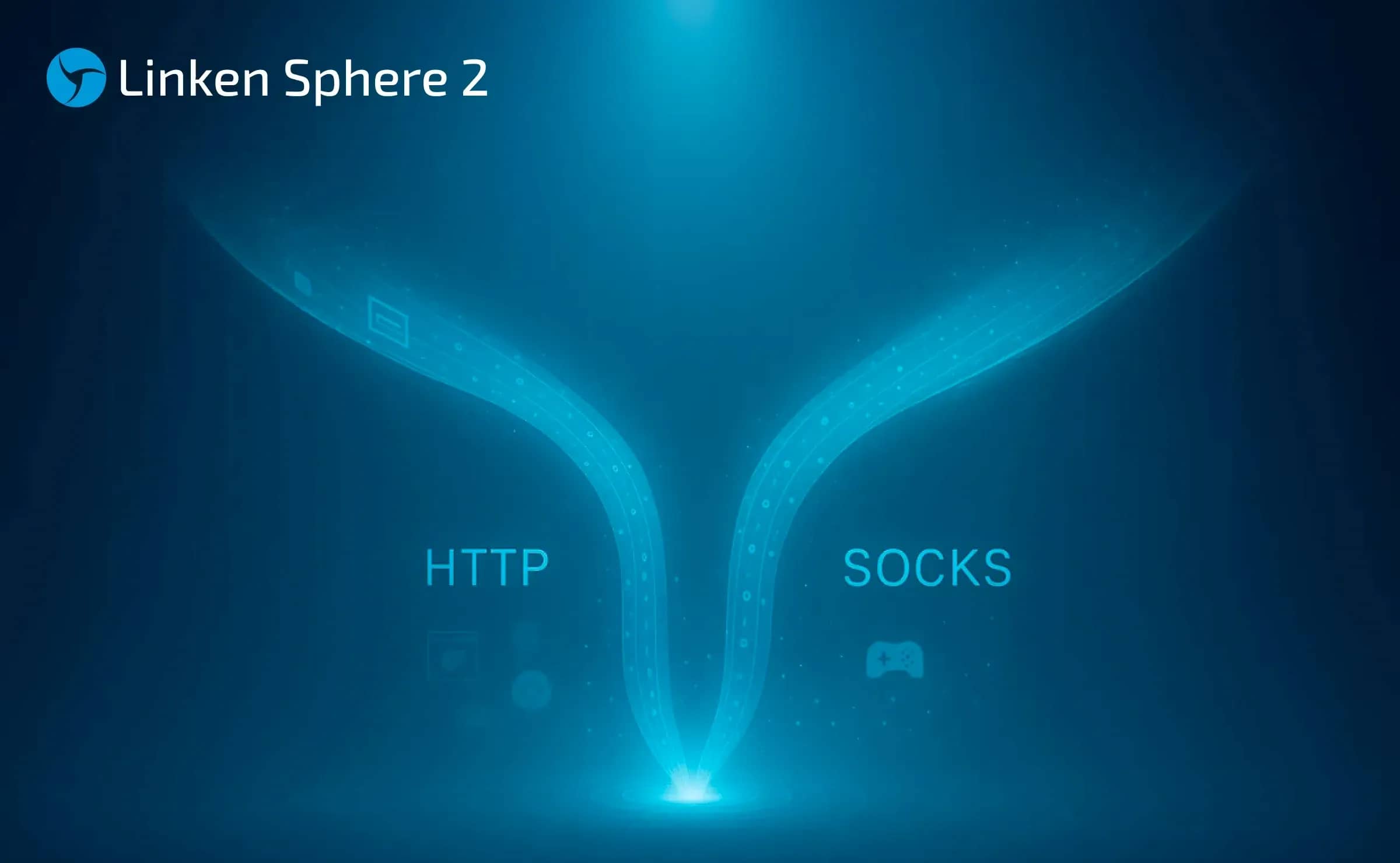
SOCKS vs HTTP Proxy: What’s the Real Difference and Which One to Choose?
There are times when you don’t want a website to link the request back to your device. That’s where a proxy comes in, it acts like a middle layer and sends the request for you. The site sees the proxy’s info instead of yours. It’s a go-to trick when you’re trying to see a page that’s not available in your region, pull content that’s restricted by location, or avoid hitting a wall when sending lots of requests.
The Best Alternative to OBS Studio
Working with a webcam on many online platforms can turn into a real challenge. A strict oval or rectangular frame appears on the screen, but your image doesn’t align perfectly with it. As a result, the system blocks further progress, demanding perfect alignment, and your workflow is disrupted before it even begins.