
How to Choose the Best Proxies: 5 Quality Parameters
Without high-quality proxies, it's impossible to effectively engage in multi-accounting, parsing, and traffic arbitrage. They are necessary to bypass anti-fraud systems, protect accounts from blocking, and anonymously collect data.
However, a high proxy price doesn't always guarantee successful resolution of a specific task. Even large providers encounter errors that affect the overall digital fingerprint of the profile. But with the right approach, you can significantly reduce costs without sacrificing quality. Let's break down 5 key parameters that directly influence proxy quality and successful task completion.
5 Quality Parameters: How to Choose the Right Proxy
When choosing a proxy, it's important to focus on specific quality parameters. Let's examine five key characteristics to check before purchasing.
IP Trust: ASN and Network Type
IP trust is an overall parameter that demonstrates the level of trust from anti-fraud and anti-bot systems, which is formed based on a number of technical characteristics of the IP address and its usage history.
The level of trust is primarily influenced by:
- Network type and ASN — Datacenter IP addresses typically have lower trust and are more likely to be restricted, while residential and mobile networks are considered less risky.
- IP reputation — Involvement of the address in suspicious activity and presence on blacklists directly reduces the level of trust.
- IP type — IPv4 and IPv6 differ in that IPv4 is universal but often has a bad reputation due to mass use, while IPv6 is less common in blacklists but is not supported by all platforms.
Anti-bot systems also use solutions for scoring IP addresses. For independent verification of IP quality, you can use third-party scoring services. One of the most popular options is IPQualityScore.
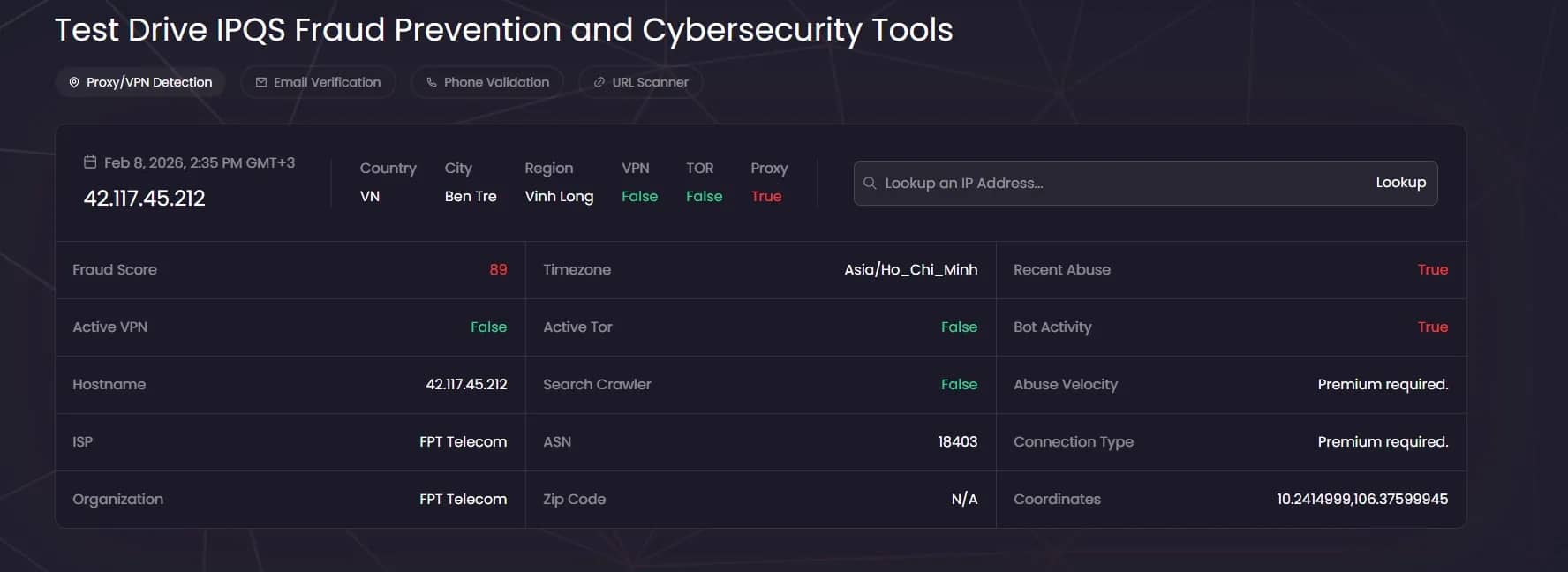
IPQualityScore allows you to see:
- IP risk score from 0 to 100 (the lower the value, the better);
- flags for bot, crawler, proxy, VPN, and TOR;
- Recent abuse status (no - good, yes - bad);
- general information about the IP: network type, ASN, network owner.
This data set allows you to evaluate the IP as anti-bot systems see it.
The service is sometimes integrated into anti-detect browsers, such as Linken Sphere. More on this in our material.
When assessing the quality of proxies from a specific service for a selected region, it is important to analyze an entire sample of IPs. The optimal approach is to take 5-10 proxies from one GEO, check them through IPQualityScore, record the results in a table, and assess the average level of IP cleanliness for the service in the working region. This approach helps understand the overall pool quality.
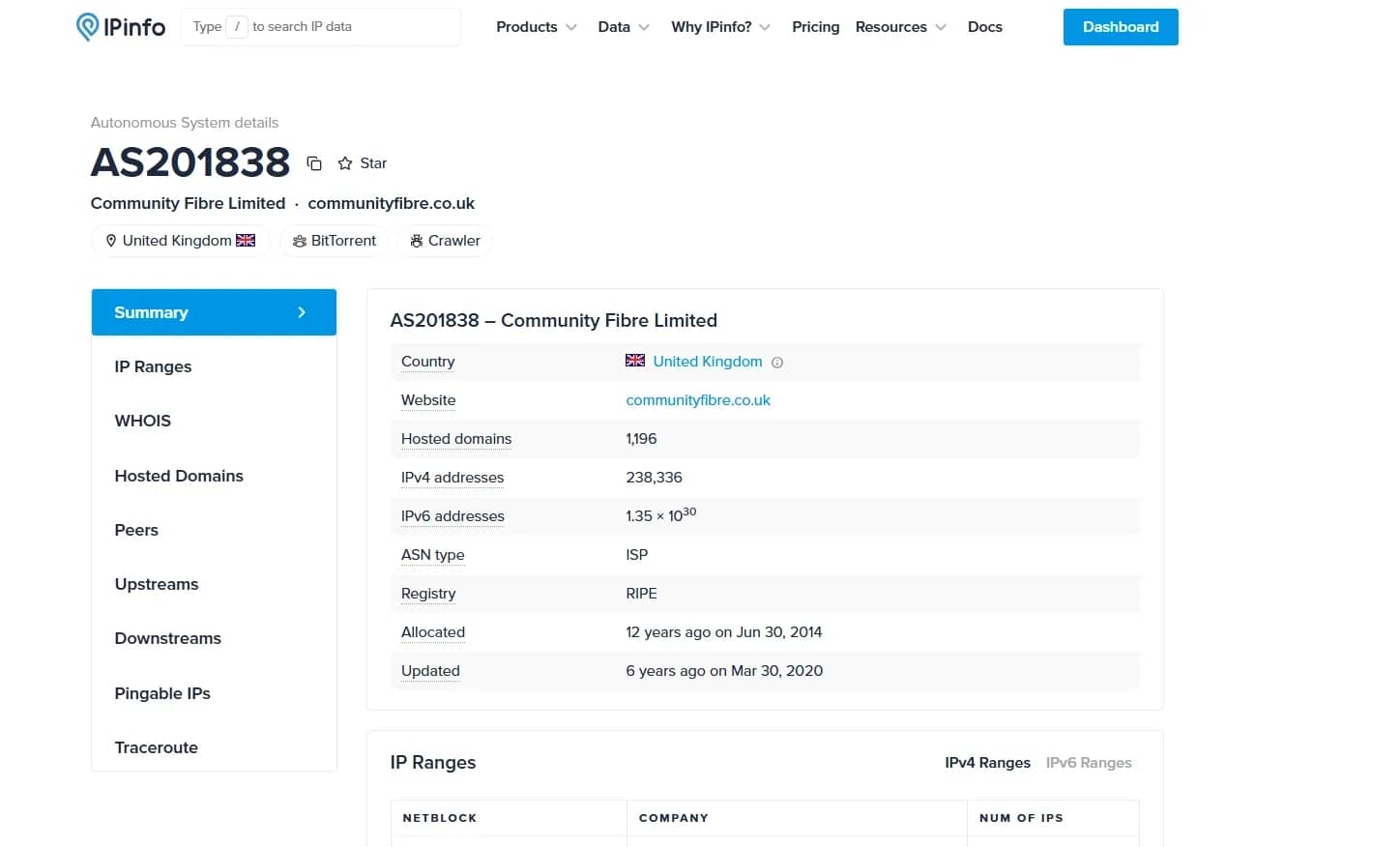
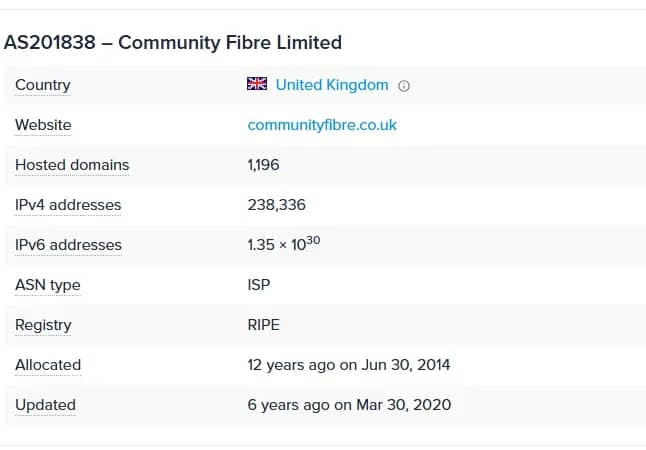
ASN, in turn, is just a unique identifier for a group of IP networks, for example, AS201838. The ASN number itself doesn't tell the user anything. To understand which organization or provider the ASN belongs to, it needs to be deciphered. This can be done through specialized databases, for example, in the IPinfo service. The search format is AS{ASN digits}. An alternative is to use IPQualityScore, which automatically decodes the ASN and shows the network owner.
Signs of proxy reliability:
- Most IPs in the pool show a low risk score, without significant differences between them.
- The IP has no obvious labels that it is a proxy, VPN, TOR, or bot.
- Recent abuse status is usually absent (that is, the IP has not been seen in problems).
- IP is not associated with data centers (mobile, residential, or ISP).
- When re-checking, the IP shows similar results.
In practice, mistakes are often made when choosing proxies.
The most common of these are:
- Evaluating proxies based on one IP, instead of looking at the entire pool.
- Paying attention only to the risk score and skipping the remaining signs.
- Ignoring ASN and not checking which providers own the IPs.
- Checking proxies without reference to a specific region.
GEO Compliance
GEO compliance is how the actual location of the IP is determined by various services and platforms, and whether it matches the location declared by the proxy service.
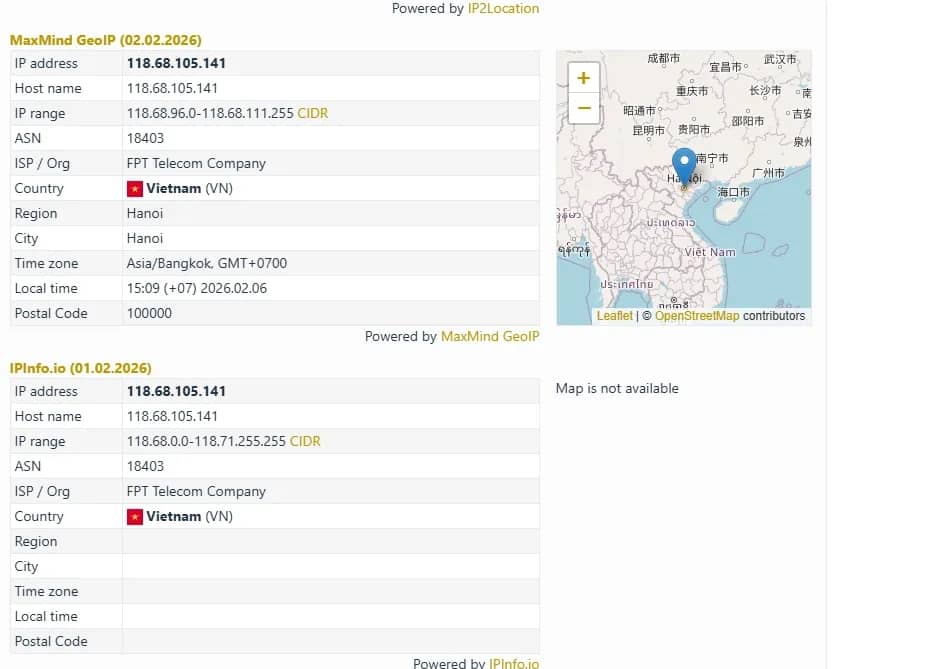
For correct assessment of this parameter, it is necessary to check the IP in several sources at once, since different services and platforms use different GeoIP databases to determine the location. Because of this, the same location can be defined differently.
To compare data from several GeoIP databases, you can use the Check-host service.
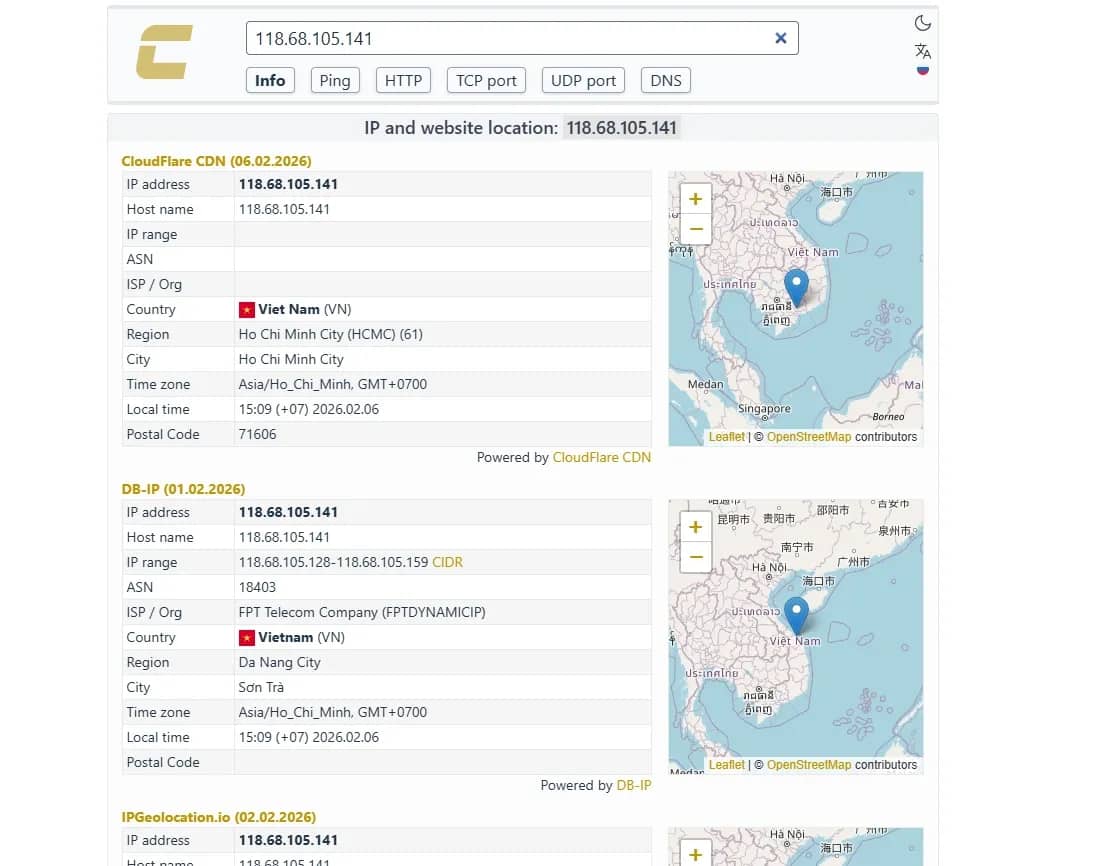
It's normal if the IP is defined as the same country in different GeoIP databases, even if the city or region differs. If the same IP is defined as different countries, then such a proxy may create problems in operation.
Common Mistakes:
- Checking the IP in one source and considering the result final.
- Ignoring significant discrepancies between GeoIP databases.
- Using proxies with floating GEO in tasks where the region is critical.
Stability: Uptime and Connection Speed
Connection speed determines how quickly pages load, requests are executed, and actions are processed. Low speed directly affects:
- increased page loading time;
- increased errors and timeouts;
- unstable operation of automation and scraping.
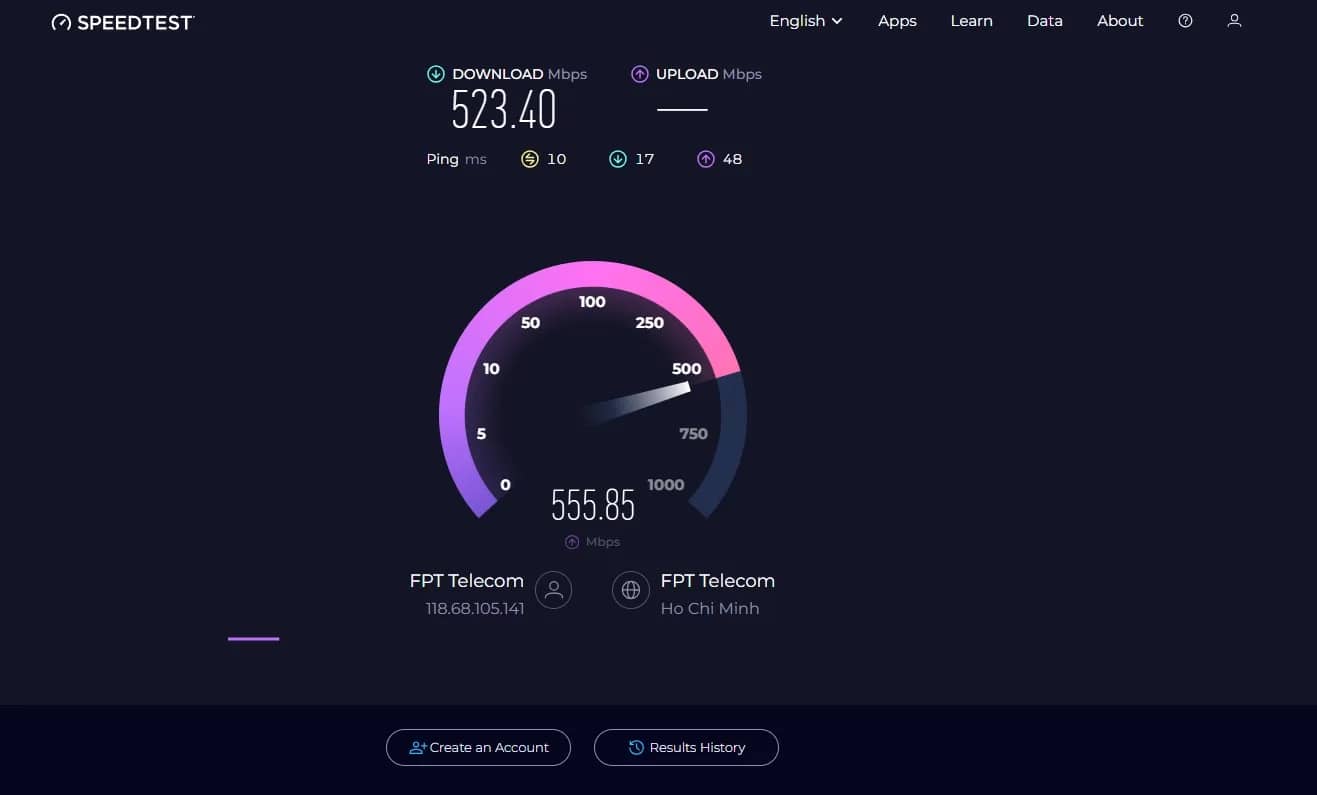
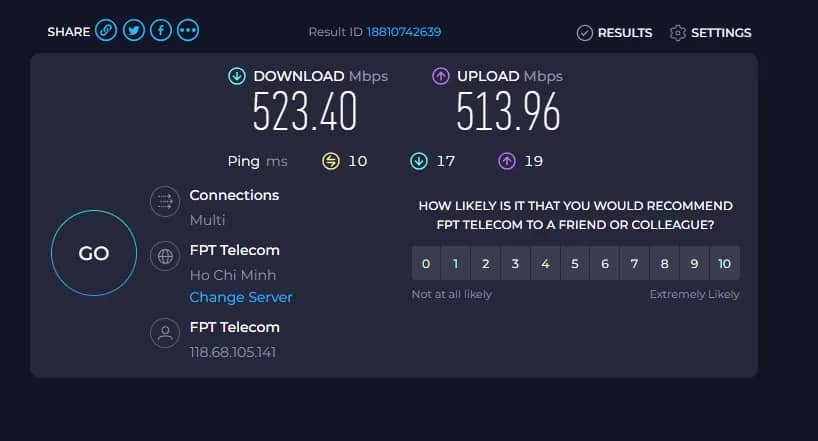
You can check this indicator in the Speedtest service. It allows you to quickly assess the download speed, latency, and overall connection quality.
In addition to speed, it is important to consider the uptime of the proxy - that is, how stable it is. Even a fast proxy is useless if the connection is regularly interrupted or the IP is periodically unavailable.
Uptime cannot be correctly assessed in advance by tests or promises of the service. This parameter is checked only in practice, in the process of real work with accounts, bots or scraping.
Common mistakes in assessing stability: focusing only on speed, ignoring connection breaks, and drawing conclusions from short tests instead of real loads.
Rotation
Rotation is a mechanism for changing the IP of a proxy, which is used in dynamic proxies. It can be performed automatically by time or by user request via a special link or API.
Rotation is especially important when:
- scraping;
- mass actions;
- working with a large number of requests;
- automation.
If a proxy service offers IP change via a link or API, this functionality needs to be checked. After sending a request to change the IP, the address should change immediately or with minimal delay. If the IP does not change or is updated only after a few minutes, such rotation is considered poor.
It is also important to check the automatic rotation, the time intervals of which are usually set in the personal account. You need to make sure that the IP really changes at a given frequency.
It is worth paying attention to whether the same IPs are repeated too often when changing addresses. To do this, rotate at least 10 times, constantly recording new addresses.
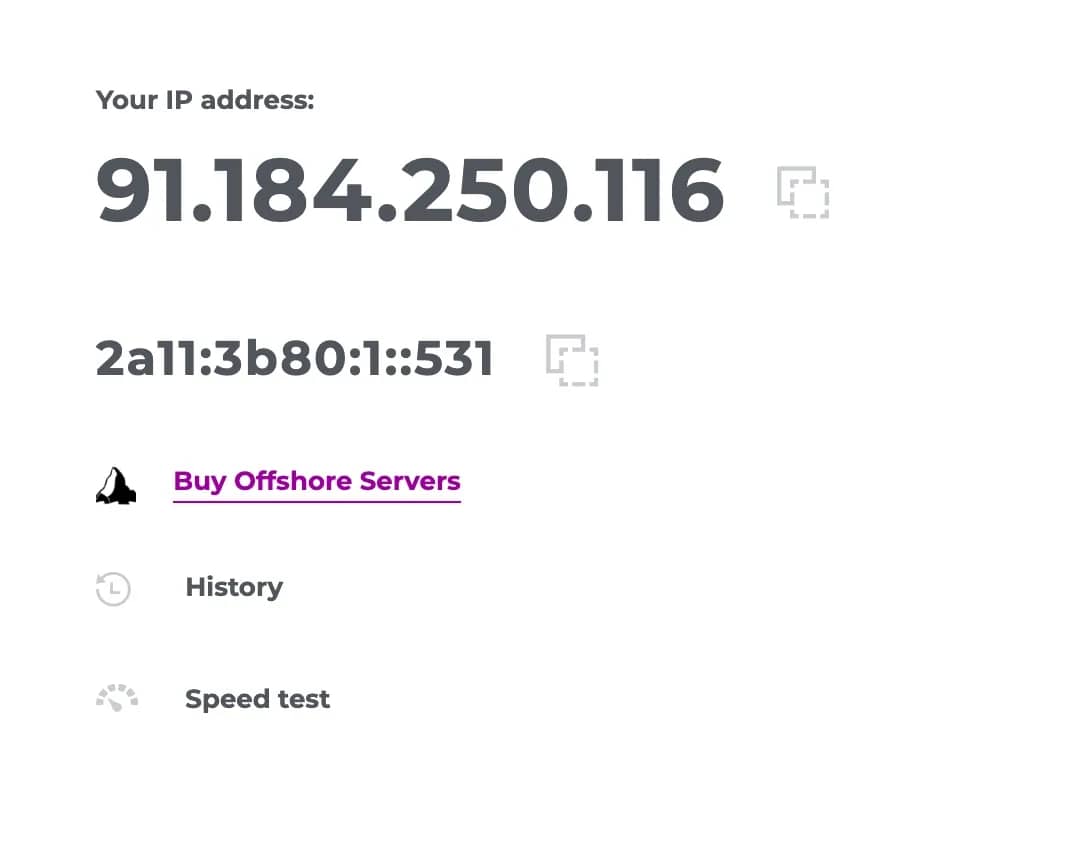
To check the current address, you can use the 2ip.io service.
Support and Ease of Working with Proxies
Support is a basic parameter of any proxy service, which directly affects comfort and speed of work. Even with good IP quality, questions may arise during the process regarding setup, rotation, address replacement, or working with specific services.
It is better to make sure in advance that the support responds promptly and to the point. If operators are limited to formal answers or respond to requests for a long time, any problems with the proxy will be resolved slowly and create inconveniences in the work.
Additionally, it is worth paying attention to the convenience of the personal account, the availability of documentation, and clear instructions.
How to Check Proxies Before Purchase
Before purchasing a proxy, it is important to conduct a basic check, which allows you to immediately weed out problematic services. Below is a simple checklist that can be used to evaluate proxies for any task.
Checklist for Checking Proxies Before Purchase
Check ASN and network type. Make sure that the IP does not belong to data centers, determine the network type and see which provider the ASN belongs to. This will help you understand whether the proxy is suitable for tasks with anti-fraud.
Check GEO. Check the IP in several GeoIP databases and make sure that the country is determined correctly. It is important that the country matches in the GEO results, even if the city or region differs.
Run speed, ping and loss tests. Check the connection speed, latency and stability of the proxy. You need to see how quickly pages load and whether there are any delays or connection breaks.
Test rotation. Check how IP change works: via link, via API, or automatically. The IP should change quickly, without delays and frequent repetitions of the same addresses.
- Evaluate captchas and blocks. Open 2–3 target sites with which you plan to work, and evaluate how often captchas, restrictions, or errors appear. This allows you to understand how the proxy behaves in real conditions, and not only in tests.
This checklist allows you to understand the quality of the proxy in advance and avoid purchasing an unsuitable pool.
Important! We recommend checking proxies through a trial period or a minimal purchase.
How to Choose a Proxy for the Task
Different tasks require different proxies. What works in one case may not be suitable in another, so first the task is determined, and only then the options are compared by price.
In tasks with strict anti-fraud (multi-accounting and working with advertising accounts, farming), IP trust, network type and ASN reputation are primarily important. Proxies should look like normal user connections and work stably in the selected GEO. High speed in such scenarios is not critical.
In scraping and automation tasks, connection speed, uptime and correct IP rotation come to the fore. The type of proxy is selected taking into account how harshly the target site reacts to requests: faster options are suitable for simple sites, and proxies with a higher reputation are needed for resources with strong protection, even if they work slower and cost more.
Common Mistakes When Choosing Proxies
The most common mistake is choosing a proxy by price or speed, without taking into account other factors. Fast proxies can perform well in tests, but when working with anti-fraud, they catch captchas and restrictions. Price and speed alone say nothing about how the IP will be perceived by platforms.
ASN and network reputation are often ignored, considering that it is enough to choose the right type of proxy. In practice, the origin of the IP plays a large role: even mobile or residential proxies can work poorly if the pool is assembled from problematic networks with a bad reputation.
A separate mistake is to buy a large batch of proxies at once without testing. The quality can vary greatly from region to region or even within the same pool. Without a test, it is impossible to understand how suitable the proxies are for the task.
Also, proxies are often checked once and the result is considered final. The reputation of the IP may change over time, especially during active work, so the lack of repeated checks leads to unexpected blockages.
Conclusion
When choosing a proxy, it is important to focus on specific quality parameters. IP trust, network type, ASN reputation, GEO compliance, connection stability, speed and correct rotation directly affect how proxies will work in real tasks.
They need to be selected for a specific scenario: the requirements for advertising accounts, multi-accounting and scraping differ. There are no universal solutions, so the right approach is to first determine the task, then check the key parameters, and only then decide on the purchase or scaling.
Frequently asked questions
- For advertising accounts, IP trust, network type, and stable GEO are important. It's best to use mobile, residential, or ISP proxies with a good ASN reputation. The IP should look like a regular user connection, without frequent address changes and without sharp discrepancies in GEO. Speed is secondary compared to trust.
- Different proxies are suitable for multi-accounting. The task is more important here: when interacting with smart anti-fraud systems, choose proxies with high trust: mobile, residential, or ISP.
- Poor proxy quality is usually noticeable by frequent captchas, checks, connection problems, and incorrect GEO detection.
- First, check the IP trust, network type, and ASN reputation. Frequent captchas are usually associated with low trust, datacenter IPs, or a bad pool reputation. In some cases, changing the proxy type or a softer operating mode helps, but more often the problem is solved by changing the service.
- It depends on the task. For advertising accounts, ASN and network reputation are more important, as they influence anti-fraud systems. For scraping, speed plays a bigger role, but even there a bad IP reputation can lead to blocking.
- Proxies cannot be fully checked for all bans in advance, as each site has its own filters and databases. In practice, they look at the IP reputation through scoring services, check it against public blacklists, and be sure to test it on 2–3 target sites to see captchas, restrictions, or blocks. For an objective assessment, it is important to check several IPs from one pool.
- Residential proxies use the IPs of regular users, while ISP proxies belong to Internet service providers and look like home connections. In practice, both options can work well. The choice depends on the pool quality and ASN reputation, not just the name of the proxy type.
- Usually, one proxy is used per account or a small group of accounts, depending on the platform and the level of risk. The main thing is not to share one IP between a large number of accounts and to ensure that the proxies are stable and with good trust.

Why Google Blocks Accounts and What Your Antidetect Has to Do With It
Google has once again complicated the mechanisms of digital identification by deploying a new, more sophisticated layer of protection based on proprietary HTTP headers. This quiet change caught most of the market off guard, triggering a wave of rushed updates. While others hastily released superficial 'fixes', we realized that we were dealing not with a minor issue but with a fundamental shift that required deep and comprehensive analysis.
SOCKS vs HTTP Proxy: What’s the Real Difference and Which One to Choose?
There are times when you don’t want a website to link the request back to your device. That’s where a proxy comes in, it acts like a middle layer and sends the request for you. The site sees the proxy’s info instead of yours. It’s a go-to trick when you’re trying to see a page that’s not available in your region, pull content that’s restricted by location, or avoid hitting a wall when sending lots of requests.

The Best Alternative to OBS Studio
Working with a webcam on many online platforms can turn into a real challenge. A strict oval or rectangular frame appears on the screen, but your image doesn’t align perfectly with it. As a result, the system blocks further progress, demanding perfect alignment, and your workflow is disrupted before it even begins.