
Top 7 Best Neural Networks for Video Generation in 2026
In 2026, neural networks for video generation are used for tasks in classic marketing, arbitrage, and content creation. The generation speed has noticeably increased, and the result cannot always be distinguished from real footage.
In this article, we will look at the capabilities of neural networks for video generation, analyze the key differences between models, and share a selection of top services for various tasks.
What neural networks for video generation can do in 2026
Modern neural networks for video creation are based on hybrid models such as DiT: diffusion components form the image, while transformers control the scene structure and details, which increases stability and reduces the number of artifacts.
- Prolonged generation without object disintegration. Technically, this is solved through an expanded context window and advanced mechanisms of variational autoencoders. Flagships like Kling 3.0 or Wan 2.5 render 10-25 seconds in a single block. The background does not float, and objects do not fall apart, because the model keeps the scene under control from the first frame to the last.
- Character retention. It works through dynamic face mapping technologies and modules like IP-Adapter. When a reference is uploaded, the neural network creates a grid of 3D coordinates and captures the facial geometry, skin texture, and body proportions. As a result, it does not draw the person anew in each frame, but moves the same shape. Therefore, the appearance remains stable even when the lighting changes or the camera moves.
- Precise camera control. It is realized through motion vectors and depth maps. Neural networks at the level of Runway Gen-4.5 provide the ability to set mathematical coordinates for the virtual lens. When camera movement is added, the model takes into account the depth of the scene: near objects shift faster, while distant ones shift slower, so the picture looks natural and does not break.
- Deep work with sound and lip-sync. Multimodal models like Google Veo 3.1 process audio and video in parallel within a single neural network. For lip-sync, the algorithm takes the spectrogram of the uploaded sound and synchronizes it with articulation points on the avatar's face with millisecond precision. The generation of background noises works through the analysis of physical events: the model recognizes the collision of objects or the surface texture in the frame and automatically generates the corresponding audio sample, synchronizing it by timecode.
- Understanding complex physics and materials. The model takes into account how the scene changes over time, so the movement looks natural. It is trained on a large volume of video and remembers how different materials behave. As a result, light falls on surfaces without significant artifacts, liquids flow plausibly, and fabric moves and deforms naturally.
How neural networks differ from each other
The difference between services comes down to architecture, the level of censorship, and the depth of manual settings. There are no universal all-in-ones; each format requires its own specific tool. What parameters should be paid attention to when choosing?
- Level of control and interface. Some models work on the principle of "enter a request — get a finished video". You set a prompt, and the system does the rest, without the ability to intervene in the process. Other models provide more control and work like an editor. You can set the movement of individual zones, control the camera direction, and configure the dynamics of the scene.
- Censorship and infrastructure. Different models have their own limitations. Some services check the text at the input and may block certain formulations and entire topics. In other solutions, there are fewer restrictions: open-source models do not check requests at the service level, thereby providing more freedom. At the same time, all the management falls on you: you need your own infrastructure, usually remote servers with powerful graphics cards.
- Specialization. Models are trained on different data, which is why the final picture differs even with identical requests. Some transmit light and object details better, while others preserve the face and movements without distortions.
- Generation formats. There are three main ways: enter a prompt and get a video, upload a picture for animation, or add a ready-made reference to edit it precisely.
Top neural networks for video generation
The market offers many video generators, but far from all of them are suitable for normal work. Below is a selection of top neural networks with good render quality.
Kling AI
Kling AI is a neural network from the Chinese company Kuaishou, designed to generate realistic videos from text descriptions and images.
Key features:
- Strict character retention. The algorithm captures biometrics, body proportions, and clothing texture. The hero's appearance is not distorted when the camera angle and lighting change. This makes it possible to use the same character in a series of different videos while maintaining full identity.
- Prolonged render without loss of quality. The neural network is capable of generating holistic scenes up to 10–25 seconds long. The model stably holds the context: the background doesn't change, and objects in the background don't float.
- Realistic physics. The model takes into account how objects behave in the real world. Kling conveys gravity, reflections, and light refraction, as well as the movement of fabrics and the dynamics of collisions.
- Absence of strict censorship. Unlike its Western counterparts, the platform has more flexible rules for moderating prompts.
- Complex camera work. The service features camera control. The user sets the movement, zoom, and large details, and the model maintains a stable FPS and a native 1080p resolution.
Veo 3.1
Veo 3.1 is the flagship model from Google DeepMind that produces cinematic videos immediately with built-in sound. It understands how objects behave and sound in the real world.
Key features:
- Native sound and lip-sync. The model generates video in parallel with the audio track. It will overlay the sound of footsteps or the noise of rain in the right place by itself, and if a character in the frame speaks, it synchronizes the movement of their lips with the uploaded voice.
- Photorealism and light physics. Veo 3.1 meticulously works out textures and lighting. Glare on glass, reflections in water, microtexture of skin — the algorithm emulates light with mathematical precision.
- Understanding complex prompts. The neural network does not forget details from long queries. You can simultaneously specify the lens type, weather conditions, the color of the hero's clothing, and a complex camera trajectory, and the model will transfer all the set parameters to the screen.
- Local editing. The video can be edited without full regeneration. It is enough to select a zone and set a new command: for example, recolor the jacket on a character or replace an object on the table. The entire remaining composition and dynamics of the scene will remain untouched.
- Strict spatial stability. When the camera moves, the frame structure is not distorted. The background holds steady, and details do not fall apart.
Runway Gen-4/4.5
Runway Gen-4/4.5 is a neural network with an advanced control interface for precise adjustment of movement in the frame and animation of individual objects.
Key features:
- Vector camera control. The platform provides the ability to set a mathematically precise trajectory of the virtual lens's movement: panning, tilting, rotating, and zooming. The function is used to create directional movement and seamless transitions.
- Motion masks. A tool for local animation. The user highlights individual elements in the frame (water, clouds, fabric) with a brush and sets the vector of their movement. The rest of the composition remains static.
- Structural video-to-video format. The neural network transforms source videos, completely replacing characters and locations. During rendering, the algorithm preserves the original animation, movement fluidity, and timing of the uploaded source.
- Precise editing. You can correct graphical artifacts in the generated material without re-rendering the entire video. Edits are made locally on the working timeline.
- Native cinematic quality. The algorithm is trained on professional datasets. The neural network applies depth of field settings, the bokeh effect, and basic color correction by default without the need to specify them in the text prompt.

MiniMax Hailuo
MiniMax Hailuo is a video generator from the Chinese company MiniMax that accurately follows text requests and qualitatively works out human motor skills.
Key features:
- Precise prompt adherence. The model is distinguished by a high level of text understanding. It transfers all elements of the request to the screen without loss: from small environmental details to complex multi-part actions, not requiring dozens of regenerations.
- Complex movement physics. The algorithm specializes in human motor skills. The neural network generates realistic dances, martial arts, and acrobatic elements without distorting body proportions.
- Facial expression detailing. The model qualitatively conveys facial expressions: subtle eyebrow movements, natural gaze shifts, and asymmetrical smile changes.
- Wide range of stylization. The platform works equally stably with different visual styles. The algorithm generates hyper-realistic shots as well as complex 2D animation, anime, 3D graphics, and stylization matching game CGI cinematics.
- Speed and streaming generation. The neural network is optimized for fast rendering of videos from 6 to 10 seconds long in a native 1080p resolution.
Seedance
Seedance is a video generator from the company ByteDance. Currently, version 2.0 is available in open access, while a large-scale update 3.0 is in closed beta testing. The tool is focused on creating long narrative videos and automating production.
Key advantages:
- Stylization for live content. A strong side of the algorithm is its high-quality imitation of amateur phone shooting. The model generates realistic lighting and camera micro-shaking.
- Continuous long generation. In the updated version, the 10–15 second limits were removed. You will be able to generate videos lasting up to several minutes with a single request.
- Built-in voiceover and lip-sync. The neural network generates an audio track in parallel with the video. The algorithm creates a voice with the necessary intonations and synchronizes the lip movements.
- Storyboard control. The platform allows setting instructions in a storyboard format. The user controls the change of shots, transitions between frames, and applies color presets.
- Render cost optimization. The latest model has been optimized, so it requires less computing power.

Grok (xAI)
Grok is a neural network from Elon Musk's company xAI, integrated into the social network X. In 2026, with the Imagine 1.0 update, the tool received full support for generating video with sound.
Key advantages:
- Integration with real-time data. Grok is directly connected to the news and trends feed on X. Due to this, it can pick up on current events faster than others and use the freshest context when generating video.
- Voice control. You can create and edit video using your voice. Dictate the script and camera commands, and the neural network will transform the voice into a visual sequence.
- Enhanced quality mode. The advanced render mode in version 1.0 increases the detailing of faces and textures. The model accurately conveys lighting and shadow depth, forming an image close to photorealism.
- Cinematic camera settings. Virtual lens control presets are available in the interface. With their help, you can quickly set up zooming in, panning, or simulating handheld shooting without long prompt writing.
- Native sound and photo animation. Grok can animate images, turning them into 10-second videos with a background audio track. The algorithm itself selects a suitable ambient noise (wind, voices, city noise) depending on what is depicted in the frame.

Wan AI
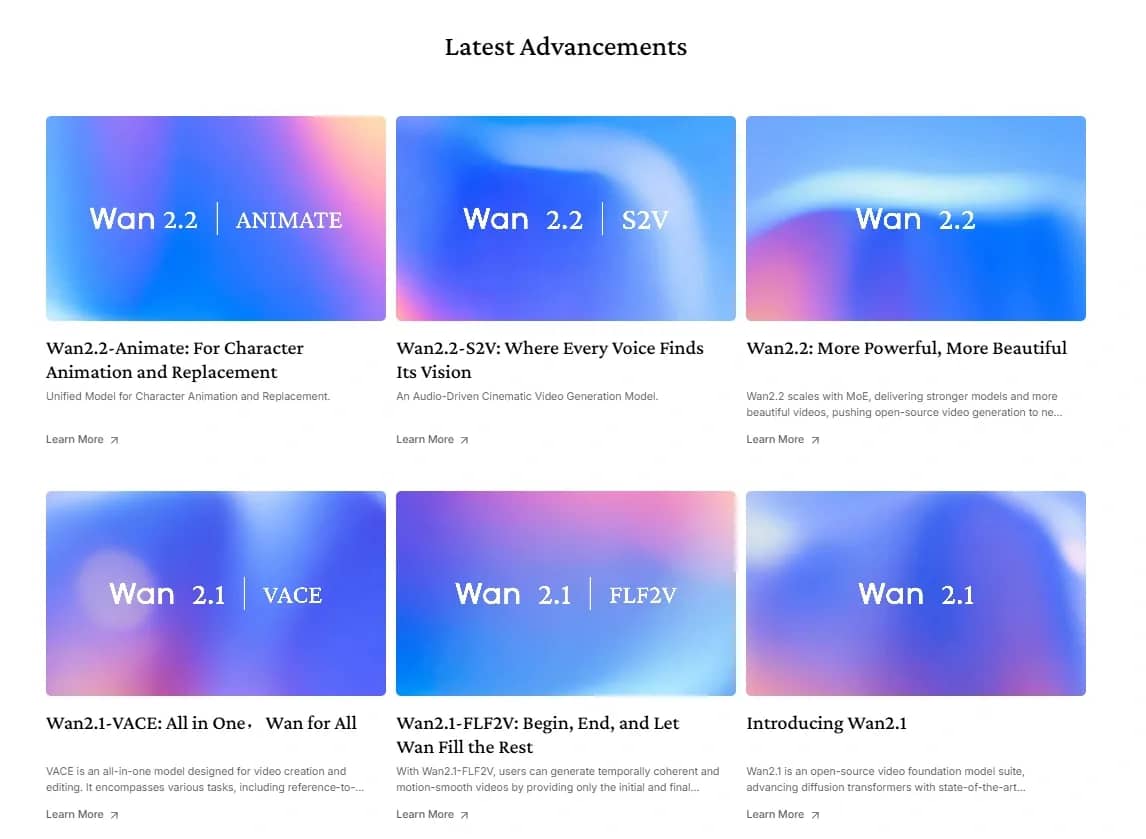
Wan AI is an open-source neural network from the company Alibaba. Unlike closed platforms, it can be deployed on your own servers, giving you full control over the generation process and data confidentiality.
Key advantages:
- High resolution and clarity. In the 2026 versions, the model natively supports rendering in 1080p. The algorithms preserve texture detailing and reduce the number of artifacts when changing shots and moving small objects.
- Precise adherence to complex requests. Wan AI handles long prompts with scene descriptions well. The model correctly places objects in the frame according to the task.
- Versatility of formats. The model works stably with both text and images. In Image-to-Video mode, it preserves the lighting, composition, and details of the original frame.
- Saving on subscriptions. With an open-source model, you do not need to pay for service subscriptions. Expenses go to hardware or renting computing power, and at large volumes, this is usually more profitable.
How to choose a neural network for video generation
The choice of a tool comes down to production tasks and the volume of content.
1. Cost and limits.
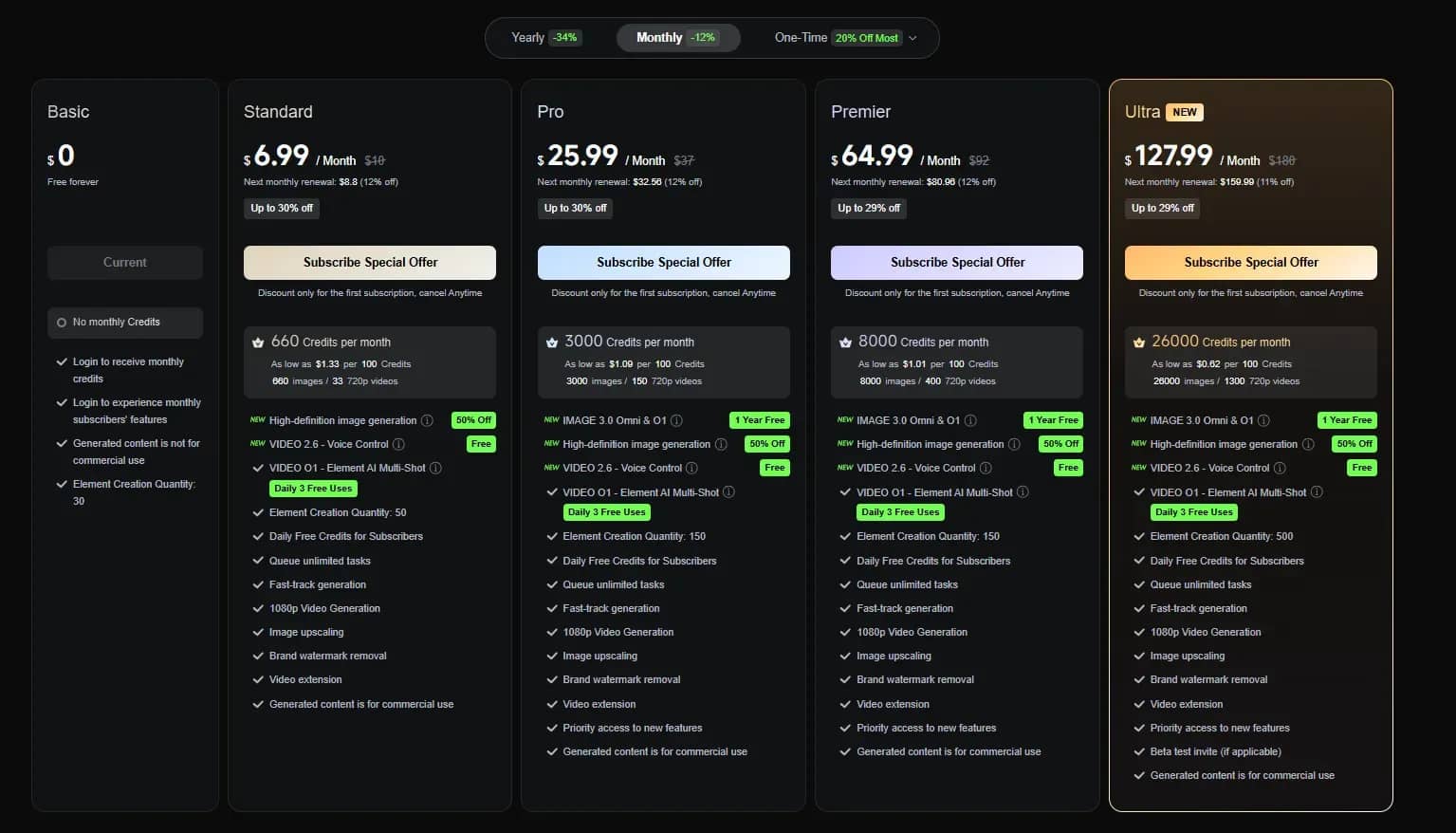
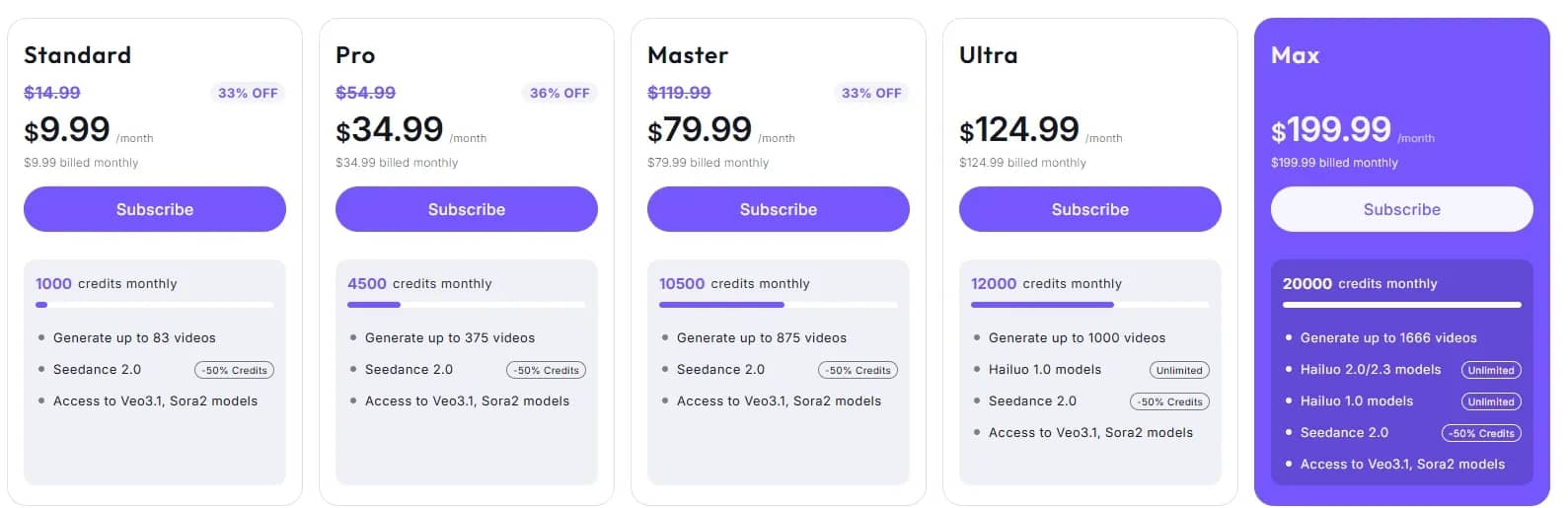
Guide yourself by the real price per second of video. It is calculated through a test: generate a video with typical settings and divide the spent credits or money by its duration. Services use different billing logic: credits, packages, or unlimited plans. With large volumes of generation, plans with a fixed payment for computing power or an unlimited plan are chosen.
2. Render speed.
Speed directly affects volumes. This is especially important if a stream of video for Shorts or TikTok is needed.
Take into account:
- generation time of one video;
- presence of queues;
- speed stability.
3. Accessibility and privacy.
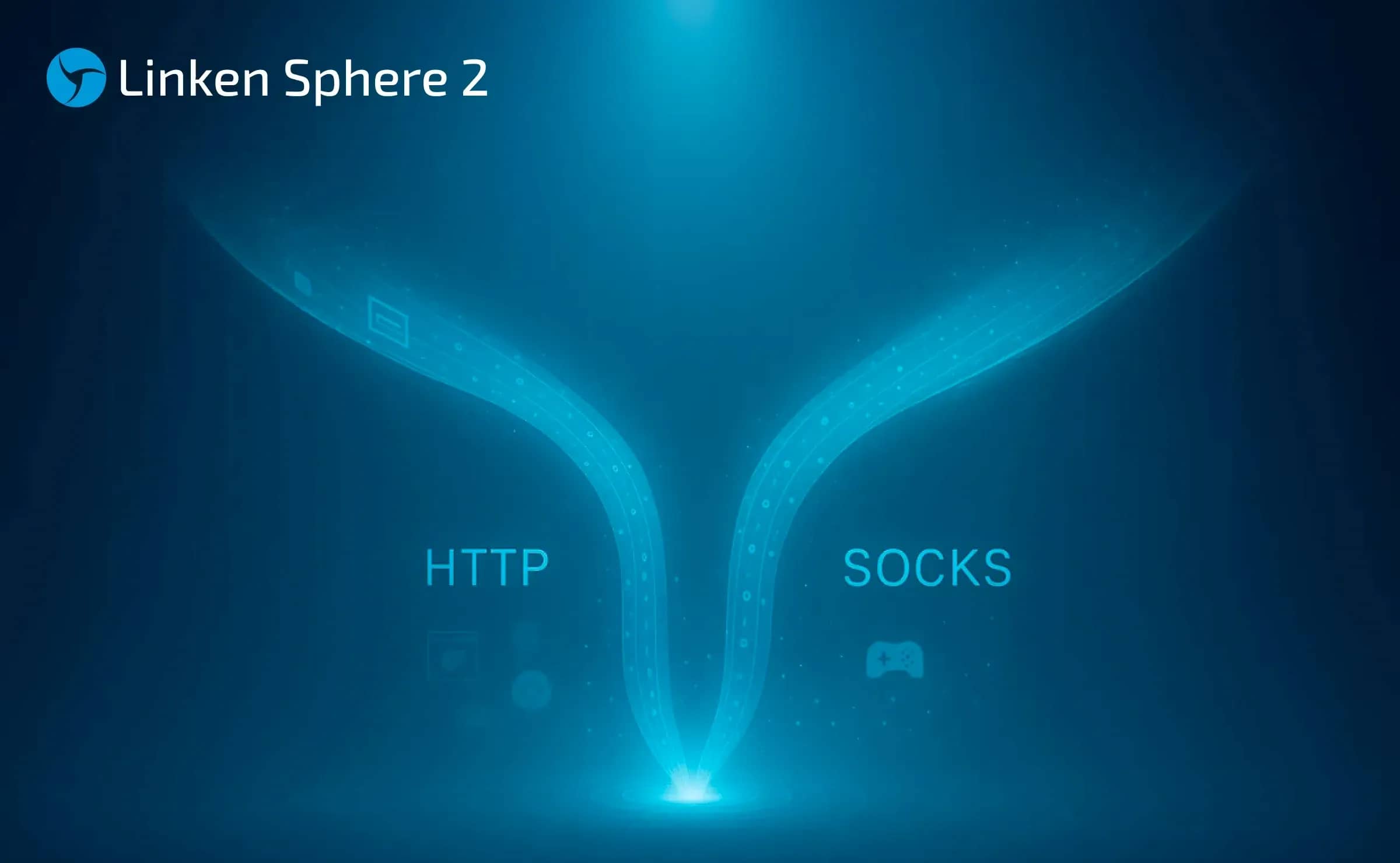
Some models have regional restrictions and strict moderation rules. This affects access to the service and the stability of work. To bypass the restrictions, you need to use a proxy in conjunction with an anti-detect (for example, Linken Sphere).
Privacy settings are checked in advance. In a number of services, generated videos are public by default or accessible via a link.
4. Post-processing tools.
Built-in tools save time on editing and speed up production.
Useful features:
- upscale to 4K;
- frame interpolation;
- replacing or removing objects;
- color correction and presets.
If these tools are built-in, the video does not need to be transferred to third-party editors, which saves time.
Conclusions
The AI video market in 2026 covers various production tasks. The tools are suitable for streaming video generation for social networks and for assembling complex advertising funnels with digital influencers. The barrier to entry is lowering: it is possible to launch videos without a large team or complex infrastructure. The main thing is to choose a neural network for your specific tasks.

Why Google Blocks Accounts and What Your Antidetect Has to Do With It
Google has once again complicated the mechanisms of digital identification by deploying a new, more sophisticated layer of protection based on proprietary HTTP headers. This quiet change caught most of the market off guard, triggering a wave of rushed updates. While others hastily released superficial 'fixes', we realized that we were dealing not with a minor issue but with a fundamental shift that required deep and comprehensive analysis.
SOCKS vs HTTP Proxy: What’s the Real Difference and Which One to Choose?
There are times when you don’t want a website to link the request back to your device. That’s where a proxy comes in, it acts like a middle layer and sends the request for you. The site sees the proxy’s info instead of yours. It’s a go-to trick when you’re trying to see a page that’s not available in your region, pull content that’s restricted by location, or avoid hitting a wall when sending lots of requests.
The Best Alternative to OBS Studio
Working with a webcam on many online platforms can turn into a real challenge. A strict oval or rectangular frame appears on the screen, but your image doesn’t align perfectly with it. As a result, the system blocks further progress, demanding perfect alignment, and your workflow is disrupted before it even begins.