
Account Farming for Traffic Arbitrage
In traffic arbitrage, accounts are consumables. But while some profiles pass moderation smoothly and run campaigns well, others get banned before launch. This is usually affected by warming up: new accounts without history are often not suitable for work.
In this material, we will look at how accounts are prepared for traffic launching, how farming differs for Facebook, Google, TikTok, YouTube, and Zen, as well as other warm-up specifics.
What Is Account Farming
Farming is the creation and warming up of accounts before working on a platform. The goal is to create a profile that looks as much like an ordinary user's page as possible. To do this, the account is gradually filled with history: watching content, leaving reactions, subscribing, and commenting.
The task of farming is to increase the account's trust. Algorithms evaluate the overall profile image: age, activity, device, IP, cookies, GEO, speed of actions, and behavior inside the service. The more naturally it behaves, the easier it is to move on to work tasks without unnecessary checks.
If, for example, a newly registered account starts mass spamming immediately after registration or gray ads are launched from it, this looks too suspicious to algorithms.
At the same time, farming does not guarantee that an account will live forever. It only reduces the risks of a quick block or, in the case of conditionally free traffic, helps gather more views.
Main Stages of Account Preparation
Different platforms have their own requirements and anti-fraud logic. Some platforms pay more attention to IP and device, others evaluate behavior, payment data, or content quality. Therefore, you cannot farm accounts for different platforms using one universal scheme. But the preparation for farming itself usually goes through similar stages.
Step 1. Setting Up the Environment
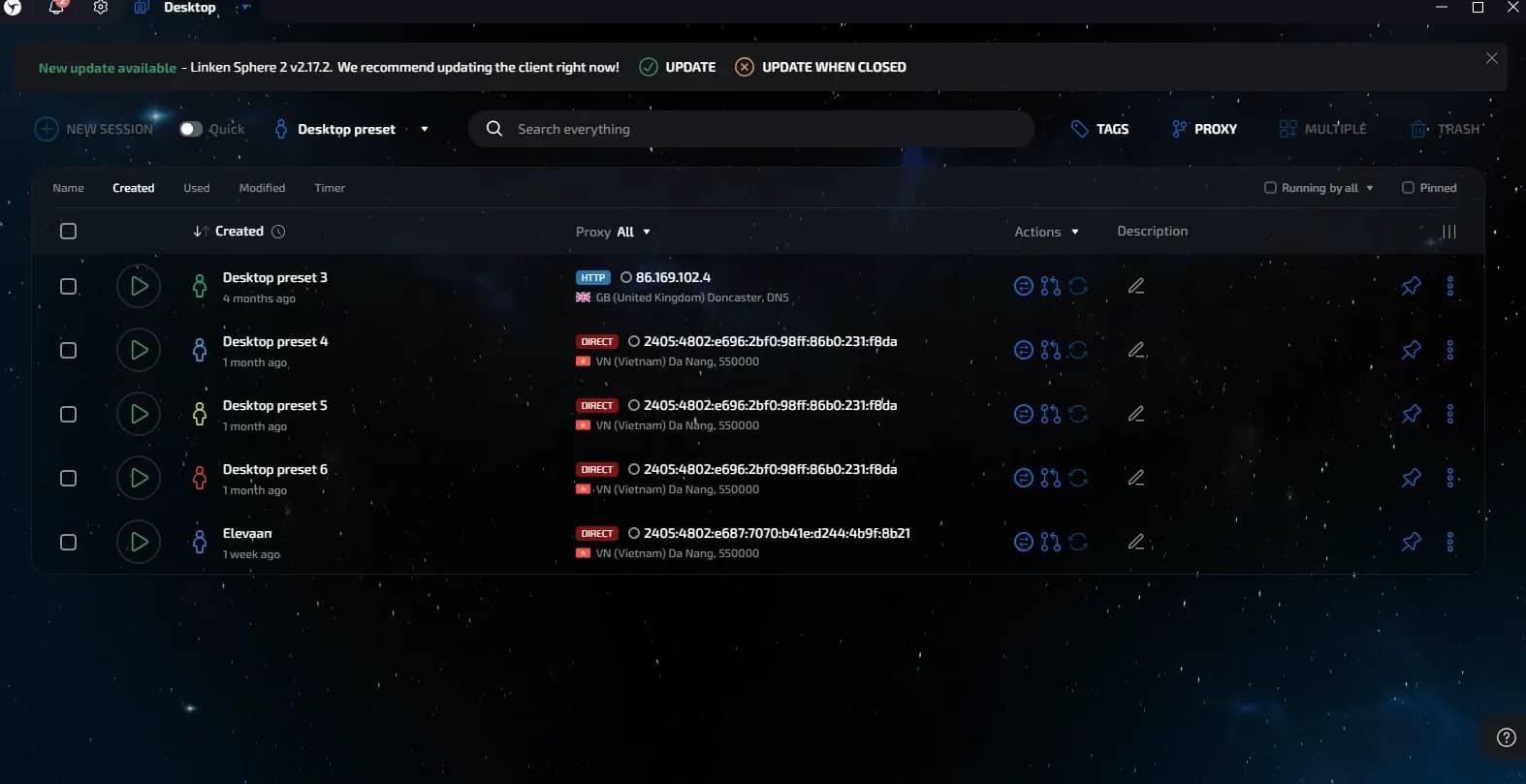
The main task at the first stage is to separate accounts into different environments. If dozens of profiles log in from one device, one IP, and with identical fingerprints, the platform instantly links them together. Therefore, a separate technical setup is assembled for each account: at minimum, an anti-detect browser and proxies.
For this, anti-detect browsers are used — such as Linken Sphere. They make it possible to create separate browser fingerprints for different accounts. For each profile, its own parameters are automatically created, by which the platform evaluates the device.
Proxies of the required GEO are also connected: it is preferable to use residential or mobile IP addresses because anti-fraud systems trust them more.
Step 2. Registering a Profile
In most services, registration is not limited to creating a login and password. The platform almost always asks you to confirm the account: via email and phone number. Therefore, at the profile creation stage, it is important to consider which contacts the account will be linked to and whether access to them will be retained later.
Usually, mailboxes on Gmail or Outlook domains are used, since most protective systems trust them more than random emails from little-known services.
Phone numbers are more complicated. The most reliable option is physical SIM cards to which constant access is retained. Such a number can be reused if the platform requests a code again after some time: when logging in from a new device, changing IP, undergoing an additional check, or restoring an account.
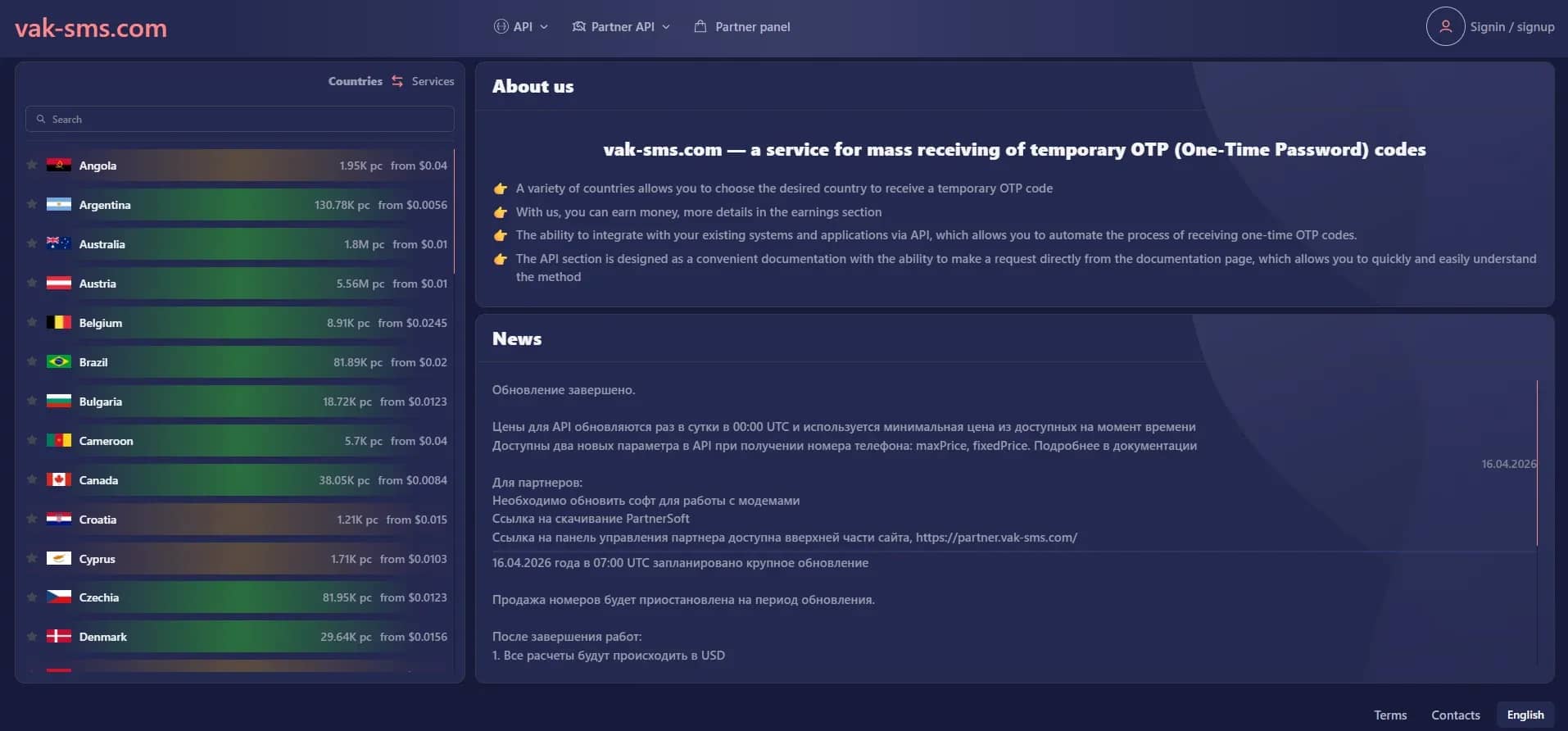
But physical SIM cards are not always convenient to purchase and store in large quantities, and when working with exotic GEOs this can be too complicated. Therefore, SMS activation services are often used in work. In this case, it is important to look not only at the price of the number, but also at the terms of repeated access. It is better to choose services where you can rent a number for a while or receive an SMS again after several days.
Step 3. Warming Up Cookies and Browser History
Before active work, it is better not to create an account in a service from a completely empty browser. If the site does not detect cookies during registration, this can become an additional risk signal for anti-fraud.
Therefore, before registration, the browser profile is warmed up on third-party trusted sites: major media outlets, online stores, forums, map services, video platforms, news sites, or search engines are opened. If the account is linked to Gmail, you can also log in to several sites via the Google widget.
After such warming up, the environment looks more natural: the browser has already been used, and it has history and active sessions.
Step 4. Internal Activity and Warm-up
The duration of the warm-up depends on the platform and your task. In some cases, a few calm sessions are enough, while in others the profile is maintained for weeks. In any case, activity is increased gradually: first simple authorization in the account, content viewing, site browsing — that is, activity typical for an ordinary user.
Then the scenario is adjusted to the mechanics of a specific platform. In social networks, more attention is paid to the feed, subscriptions, reactions, and comments. In advertising accounts, profile setup, payment data, login history, and actions before launching campaigns are assessed.
Farming Specifics for Different Sources
As we noted earlier, the approach to farming depends on the specific source. Let's look at the most popular platforms among affiliate marketers.
Warm-up for Facebook
Facebook evaluates not only the profile itself, but also the activity around it: behavior in the social network, page, ad account, payment data, content, and action history. Therefore, a fresh account should not be immediately moved into Business Manager.
First, the profile is maintained like an ordinary user's account: scrolling the feed, opening posts, reacting to publications, visiting groups, and gradually building history inside Facebook. For ad warm-up, the time allocated is usually not a couple of days, but at least 3–4 weeks.
Before launching ads, a Fan Page is prepared separately — the page on behalf of which advertising activity will be conducted. It is not left empty: an avatar, cover, description, basic information, and several posts are added.
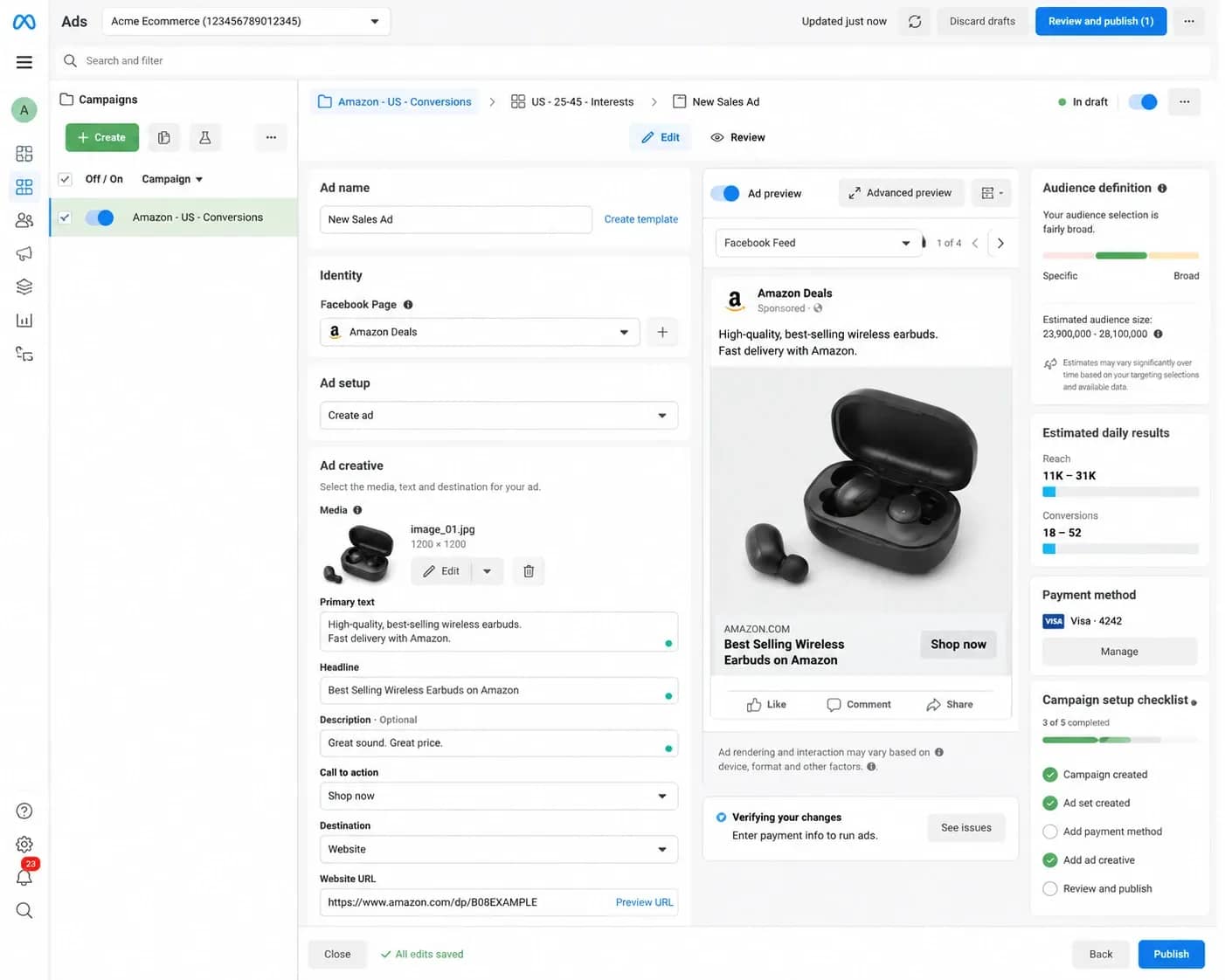
At first, it is better to launch a small white campaign with a safe creative and a trusted offer (for example, a product on Amazon).
Warm-up for Google (Google Ads and YouTube)
If you are warming up an account for Google Ads arbitrage, then for the first 2–3 days it is better to use the profile calmly: go to Google, search ordinary queries, open sites from search results, read articles, make bookmarks, and visit major white-hat resources. You can log in via Sign in with Google on several neutral services: forums, news sites, Pinterest, tool services, or content platforms.
Then you can enter Google Ads, switch to expert mode, check the interface, Keyword Planner, payment profile, domain, and landing page. Then launch a small test campaign in a safe niche: clean wording, a clear landing page, minimal budget. The goal is to check that the account passes review normally and that the ads receive impressions.
There is no strict rule on timing: warming up for Ads usually takes up to 2–4 weeks. It all depends on the account age, GEO, payment method, domain, and future vertical.
If you work with conditionally free traffic, YouTube is warmed up through the channel itself. First, it is set up: name, avatar, banner, description, topic. Before publishing content, the account is used for 2–3 days like an ordinary viewer: watching competitors' videos in the vertical, finishing videos, liking, subscribing, and leaving a few simple comments.
Then you can move on to the first Shorts: usually, several accounts are taken, and 1–2 unique white-hat videos are uploaded to each channel. Channels that receive at least 1,000 impressions are taken into work and continued for another 2–3 days: regular topical videos are published. After that, you can carefully add creatives with calls to follow the link in the description.
To increase trust, sometimes a YouTube channel is connected to Google Ads and a small promo is launched for a safe video.
Warm-up for TikTok
In TikTok, two scenarios need to be separated: preparing accounts for TikTok Ads and warming up profiles for conditionally free traffic. The mechanics are similar, but the goals are different. In Ads, the ad account, payment method, pixel, creatives, and landing page are prepared. In conditionally free traffic, the profile itself is boosted so that the content starts receiving reach through recommendations.
For paid traffic, the emphasis is placed on the technical part: account, Business Center, payment profile, proxies, domain, landing page, and ad creatives. If you immediately launch with a new setup, a large budget, and an aggressive offer, the chance of quickly getting rejections or restrictions is very high.
Usually, the environment is prepared first: anti-detect browser, proxies for the required GEO, clean email, payment method, and domain. Then the account is left for a short settling period, Ads Manager is opened, and the account interface, cabinet settings, pixel, events, and payment data are checked.
The budget is usually not scaled sharply at the start. First, the account is allowed to spend minimal amounts, while ad statuses, rejections, charges, and campaign behavior are monitored. If everything is stable, the budget is increased gradually.
In conditionally free traffic, the main asset is the profile itself. Here, account behavior inside the app is more important: how it watches the feed, which videos it watches to the end and which ones it skips, what it likes, whom it follows, and what content it starts publishing. Only mobile devices are used, with iPhones being more reliable.
In TikTok, it is important to create the account correctly: remove the SIM card and connect to a quality IP address of the required GEO. At the same time, first reset network settings and disable geolocation and tracking services. It is better not to run more than three profiles on one device in TikTok.
The longer you warm up with white-hat content, the more trust and reach you will receive.
How to Evaluate the Quality of a Farmed Account
The quality of a farmed account is evaluated by how ready it is for the workload. The entire profile history matters: when it was created, how long it stayed in the settling period, what actions were performed from it, whether there are cookies, interests, bindings, Fan Page, ad account, payment history, or first impressions.
The first thing to look at is age and settling period. A fresh newly registered account without history is always weaker than an account that has already lived inside the platform for some time.
The second criterion is internal activity. A quality profile should have content views, reactions, subscriptions, comments, interests, and browsing history. For Facebook, it is also checked whether personalized ads have appeared. This is not an official trust indicator, but in farming it is often used as an indirect signal: the profile no longer looks empty, a set of behavioral data has been collected for it, and the system understands which topics and ads to show it.
The third point is the technical setup. The account must work in a separate environment: an anti-detect profile, proxies for the required GEO, cookies, normal browser history, and a match between language, region, and behavior. If the account is formally warmed up, but you log in from an unsuitable IP or an empty browser, it may instantly lose all its trust.
The fourth criterion is access and bindings. The account must have an email, phone number, or another confirmation method to which access is retained.
For advertising accounts, work history is evaluated separately. For Facebook, this may include having a Fan Page, BM, ad actions, first impressions, and the absence of ad activity restrictions, checks, and quick bans.
For conditionally free traffic and content platforms, the algorithm's response is more often evaluated. In TikTok or Shorts, first impressions, retention, likes, comments, subscriptions, read-throughs, CTR, and entry into recommendations are important.
When It Is More Profitable to Buy Ready-Made Accounts
Independent farming requires time and money: farmers, anti-detect browsers, proxies, emails, SIM cards, separate profiles, and access control are needed. If the budget is small, maintaining such infrastructure is not always profitable.
Buying ready-made accounts helps when you need to launch tests quickly, but there is no time to build your own farming department. For example, a team has already found an offer, prepared creatives, assembled landing pages, and wants to immediately test the hypothesis in practice. In this situation, waiting several weeks is unprofitable: the setup may burn out or the offer terms may change.
At the same time, buying accounts does not eliminate risks: for example, newly registered accounts may be sold under the guise of quality farming. Before purchasing in bulk, it is better to buy a small test batch and run several accounts through a standard scenario: for example, when working with conditionally free traffic, this may be video publication. If there are impressions, you can continue buying from this seller.
Conclusion
Environment security is important when working with almost any traffic source: Facebook, Google, TikTok, YouTube, and other platforms. An account can get lost due to an unsuitable IP, an empty browser, a strange fingerprint, a sudden device change, or linkage with other profiles.
This is especially important when working with paid traffic. Losing a newly created YouTube channel is unpleasant, but usually it is just time lost on registration and warming up. Losing an ad account with a balance, linked payment method, domain, pixel, and already launched campaigns is much more expensive.
Why Google Blocks Accounts and What Your Antidetect Has to Do With It
Google has once again complicated the mechanisms of digital identification by deploying a new, more sophisticated layer of protection based on proprietary HTTP headers. This quiet change caught most of the market off guard, triggering a wave of rushed updates. While others hastily released superficial 'fixes', we realized that we were dealing not with a minor issue but with a fundamental shift that required deep and comprehensive analysis.
SOCKS vs HTTP Proxy: What’s the Real Difference and Which One to Choose?
There are times when you don’t want a website to link the request back to your device. That’s where a proxy comes in, it acts like a middle layer and sends the request for you. The site sees the proxy’s info instead of yours. It’s a go-to trick when you’re trying to see a page that’s not available in your region, pull content that’s restricted by location, or avoid hitting a wall when sending lots of requests.

The Best Alternative to OBS Studio
Working with a webcam on many online platforms can turn into a real challenge. A strict oval or rectangular frame appears on the screen, but your image doesn’t align perfectly with it. As a result, the system blocks further progress, demanding perfect alignment, and your workflow is disrupted before it even begins.